Give it a read: ArtificIonomics: Mitigating Human Risk of AI Technologies in the Workplace Using Industrial Hygiene Principles by Christopher Warren is a practical and human focused guide for navigating the growing presence of artificial intelligence and robotics in modern workplaces. Rather than treating AI as a purely technical or ethical issue, the book reframes it as an occupational risk that influences how people work, think, and make decisions. Drawing on established industrial hygiene principles, it provides clear frameworks, real world examples, and actionable strategies to help organizations anticipate hazards, evaluate exposure, and implement effective controls.
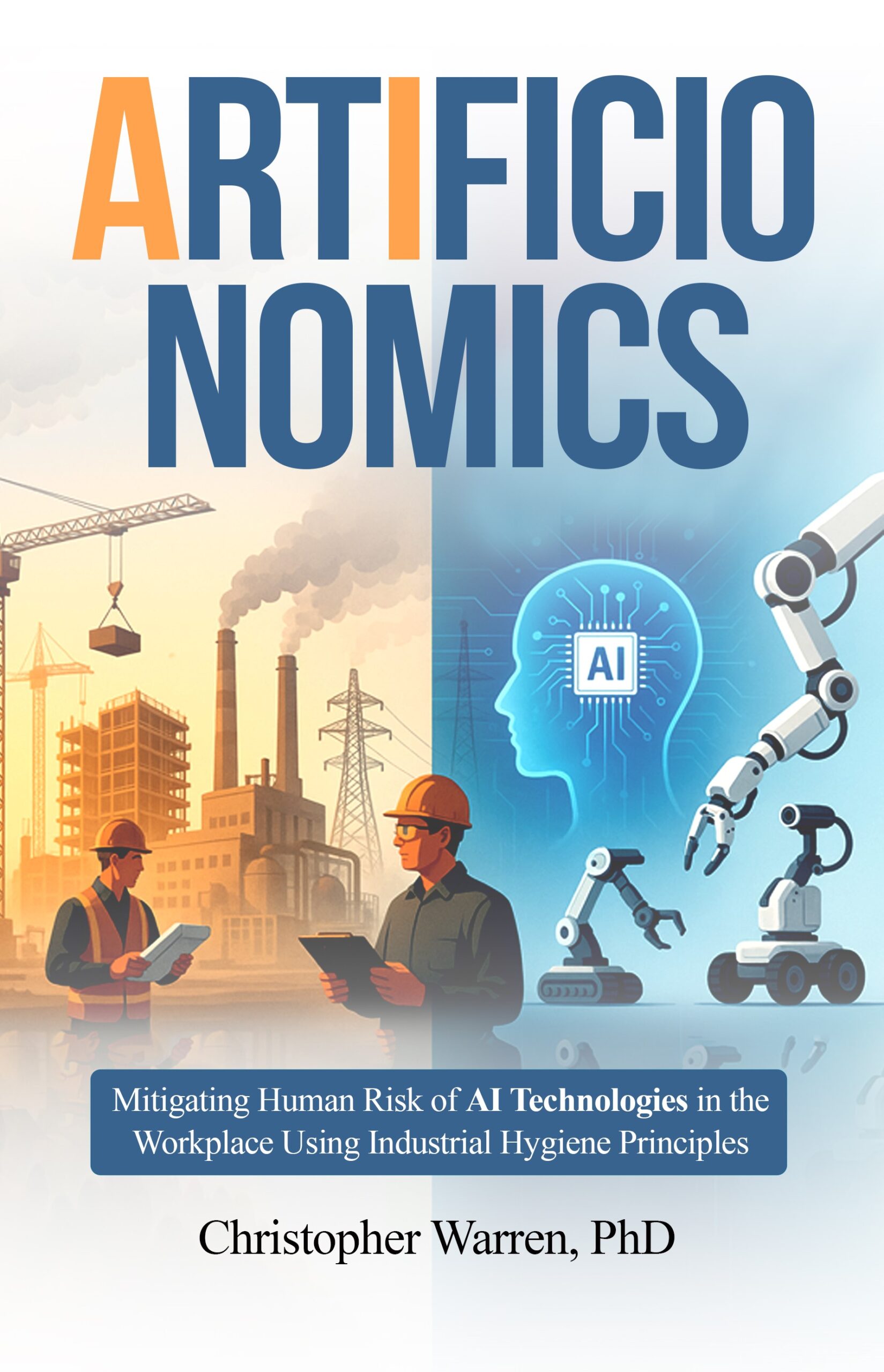
From physical risks associated with robotics to cognitive and psychological pressures created by algorithmic management, ArtificIonomics offers safety professionals, executives, and policy leaders a structured approach to integrating technology responsibly while protecting worker well being, trust, and organizational credibility.
AI is no longer a distant concern for safety leaders. Instead, it is increasingly influencing how work is assigned, monitored, and evaluated. Leaders who understand how technology changes risk are more likely to succeed in the coming years than those who become technologists.
Therefore, future safety leaders must recognize that AI influences behavior. Systems that optimize schedules, track movement, or flag performance issues affect pace and pressure. These changes shape fatigue, attention, and decision making.
Treating AI as a technical upgrade misses this reality. Safety leadership requires an understanding of how systems interact with human limitations. That perspective allows leaders to identify hazards that are not immediately visible.
One of the most important lessons for future safety leaders is that automation does not remove responsibility. AI systems can assist, but they cannot replace judgment. Leaders must ensure that humans remain involved in decisions that affect safety and livelihoods.
This includes knowing when to trust outputs and when to question them. It also includes creating clear escalation paths when systems behave unexpectedly. Safety leadership means preserving space for human intervention and oversight.
Physical hazards will always be a concern, but future safety leaders must also pay equal attention to mental demands. Alerts, dashboards, and constant feedback can overwhelm workers. Over time, this reduces vigilance and increases the likelihood of errors. Understanding this cognitive load as a safety factor enables leaders to address risk more effectively. It shifts the focus from blaming individuals to improving system design.
AI systems that operate without explanation undermine trust. Workers who do not understand how decisions are made are less likely to engage with safety programs. Future safety leaders must advocate for transparency, even in complex systems. Clear communication about what AI can and cannot do strengthens safety culture and reinforces workers’ safety and worth.
AI systems change with constant data updates and model drift. Thus, safety leadership must adapt to this reality by conducting ongoing monitoring and review. Static policies will not be enough, and future leaders will need to treat AI risk management as a living process rather than a one time assessment.
Books like ArtificIonomics help bridge the gap between traditional safety leadership and modern systems. They provide a language and structure for addressing AI risk while maintaining a focus on people.
As work continues to change, safety leadership will be defined by the ability to protect human well-being in increasingly complex environments. Understanding AI is now part of that responsibility, not as a technical challenge, but as a human one.
For more details visit our website: https://artificionomics.com/