The future of work will not be shaped by technology alone. It will be shaped by how well people are prepared to use it, question it, supervise it, and work beside it safely. As advanced systems become part of daily operations, organizations can no longer treat training as a basic introduction to new tools. Training must become a central safety control.
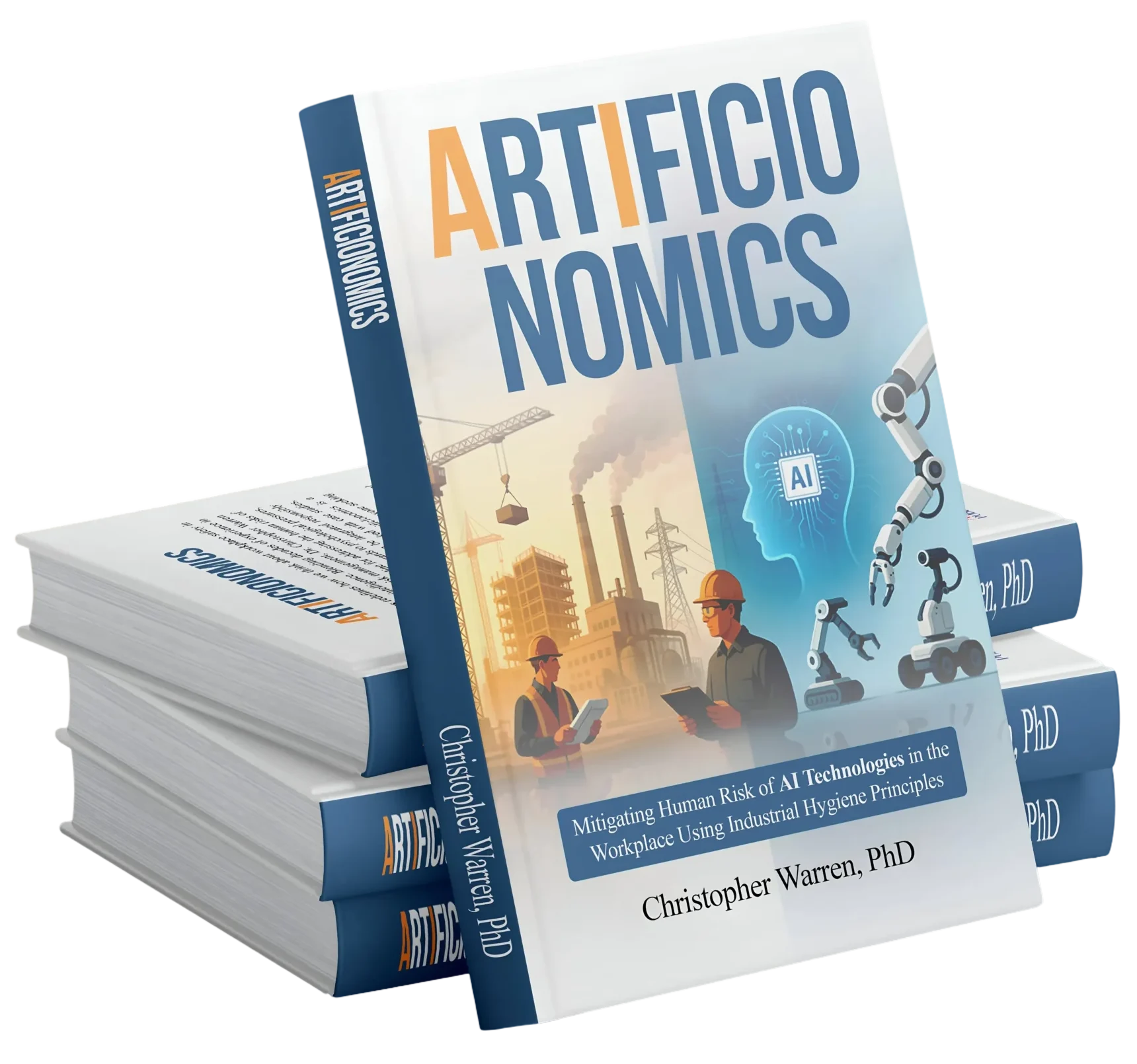
This is one of the key ideas explored in Artificionomics: Mitigating Human Risk of AI Technologies in the Workplace Using Industrial Hygiene Principles by Christopher Warren, PhD. The book explains that workplace transformation must be managed through a human safety lens. New tools can improve speed, accuracy, and efficiency, but without proper preparation, they can also create confusion, stress, overreliance, privacy concerns, and poor decision making.
A workforce is not truly ready for an AI integrated future simply because employees know how to operate a platform. Readiness means workers understand the limits of the system, know when to question its output, recognize signs of risk, and feel confident using their own judgement. It also means managers understand how technology affects workload, morale, trust, and psychological safety.
Training must therefore move beyond technical instruction. Employees need role specific learning that explains how systems influence their tasks, performance expectations, communication, and safety responsibilities. Workers should be taught how to identify errors, report concerns, challenge questionable outcomes, and protect sensitive information. Supervisors must be trained to avoid blind dependence on automated recommendations and to preserve human oversight when decisions affect people.
Christopher Warren’s Artificionomics offers a practical framework for building this kind of preparedness. Drawing from industrial hygiene principles, the book shows how organizations can identify, evaluate, and control new workplace risks before they become serious problems. Training becomes part of that control strategy. It helps reduce fear, builds confidence, and gives employees a clearer sense of agency during technological change.
The book also emphasizes that training should not be a one-time event. As workplace systems evolve, employee education must evolve as well. Continuous learning, worker feedback, updated policies, and practical scenario based exercises are essential. People need more than instructions. They need context, support, and a voice in how technology is introduced and managed.
For executives, safety professionals, industrial hygienists, human resource leaders, and policymakers, Artificionomics provides a timely guide to responsible workforce preparation. It reminds leaders that innovation succeeds only when people are equipped to participate in it safely and confidently.
The organizations that thrive in the future will not be the ones that simply adopt the most advanced tools. They will be the ones that invest in their people first. Christopher Warren’s book makes that responsibility clear: a safer future of work begins with a trained, informed, and empowered workforce.
Discover the framework for protecting people in AI-driven workplaces. Read ArtificIonomics today. https://www.amazon.com/dp/B0GFY4RL6B