Few topics create as much concern in today’s workplace as job displacement. Headlines often focus on roles being replaced, tasks being automated, and entire industries shifting. It is easy to assume that the future of work is a simple equation where machines take over and people are left behind.
Job displacement is not a single event. It is a gradual transformation that reshapes roles, responsibilities, and expectations over time. While some tasks are being removed, others are being created. The challenge is not just about losing jobs. It is about how work itself is evolving.
One of the most important truths is that most roles are not disappearing entirely. Instead, they are being redefined. Routine and repetitive tasks are increasingly handled by intelligent systems, allowing employees to focus on areas that require judgment, creativity, and human interaction. This does not eliminate the role, but it changes what the role looks like.
Skills that were once central to a job may become less relevant, while new expectations emerge. Workers are asked to adapt, learn new tools, and operate in environments that are constantly changing. This creates a sense of uncertainty, even when the role itself remains in place.
Another important factor is the speed of change. In previous industrial shifts, transitions occurred over longer periods, allowing time for adjustment. Today, change is happening faster. Organizations adopt new systems quickly, often expecting employees to keep pace without fully addressing the human impact.
Employees may feel that they are constantly catching up, which can lead to stress and reduced confidence. The issue is not just whether jobs are lost, but whether workers are supported through the transition.
There is also a misconception that displacement affects only certain types of work. In reality, the impact is widespread. From administrative roles to technical positions, many jobs are experiencing shifts in how tasks are performed. The difference lies in how much of the role changes and how quickly those changes occur.
At the same time, new opportunities are emerging. As systems take on structured tasks, there is a growing demand for roles that involve oversight, interpretation, and decision-making. These roles require a different set of skills, often combining technical understanding with human insight.
This is where organizations play a critical role. Job displacement becomes a risk when change is introduced without preparation. When employees are not given the tools, training, or clarity they need, even small shifts can feel overwhelming. On the other hand, when organizations invest in development and provide clear direction, the transition becomes more manageable.
Another overlooked aspect is the psychological impact. Even the possibility of displacement can affect how employees view their work. Concerns about job security can reduce engagement, limit risk-taking, and create a more cautious work environment. This can affect performance long before any actual changes occur.
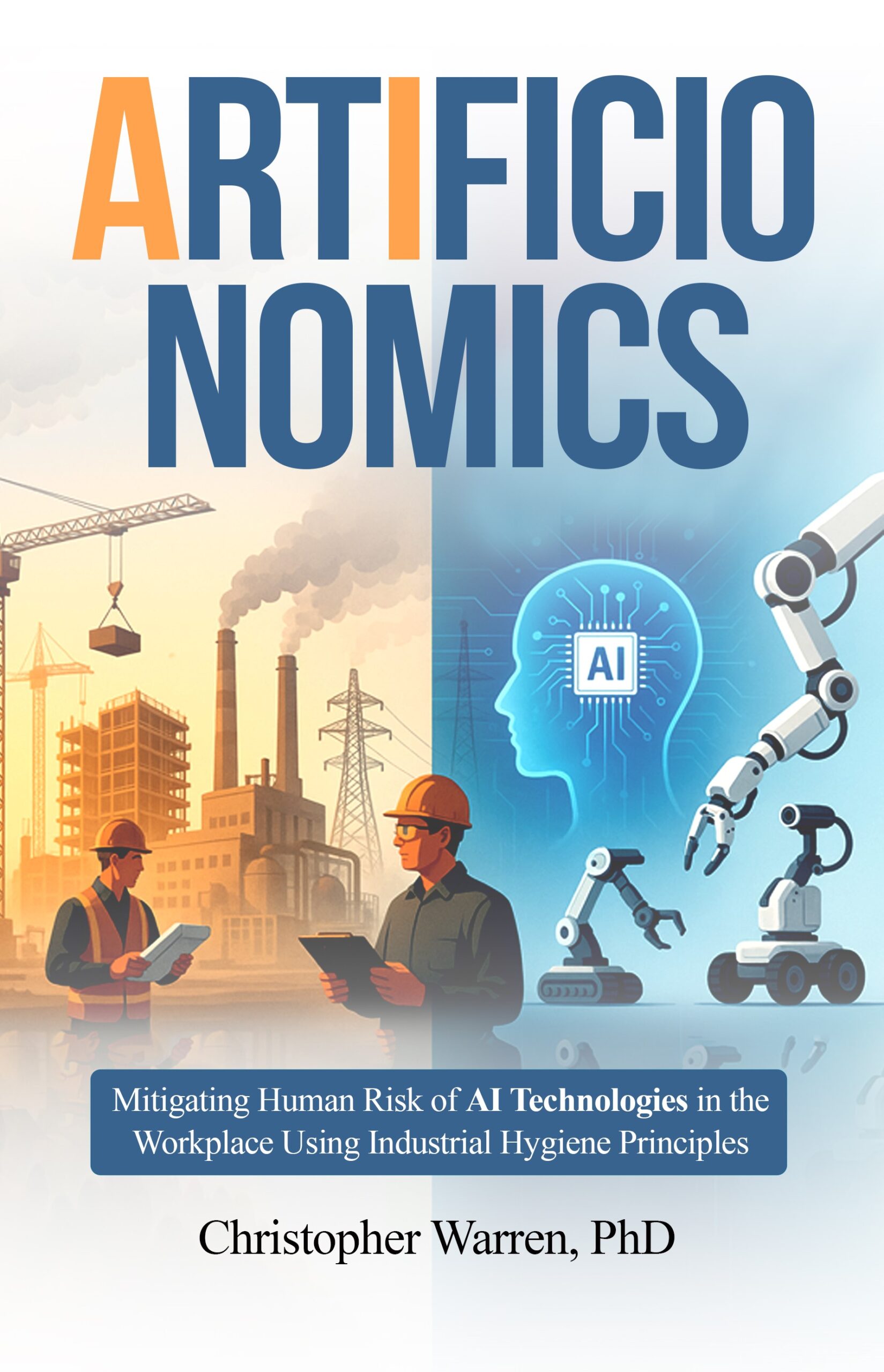
This is the perspective explored in Artificionomics: Mitigating Human Risk of AI Technologies in the Workplace by Christopher Warren, PhD. The book moves beyond the surface-level discussion of job loss and examines how technological transformation affects workers at a deeper level. It provides a framework for managing change in a way that protects both productivity and well-being.
The truth about job displacement is not as simple as jobs being lost or saved. It is about roles being reshaped, expectations evolving, and people navigating a new kind of workplace. The organizations that succeed will not be the ones that avoid change. They will be the ones that guide their workforce through it with clarity, support, and responsibility.
Get your Copy Now on Amazon: https://www.amazon.com/dp/B0GFY4RL6B