Workplace management is changing. In many organizations, decisions once made by supervisors are now shaped by automated systems that assign tasks, measure productivity, rank performance, schedule shifts, monitor behaviour, and even influence discipline. These systems promise speed and efficiency, but they also raise a serious question: what happens to employee well-being when people feel they are being managed by machines?
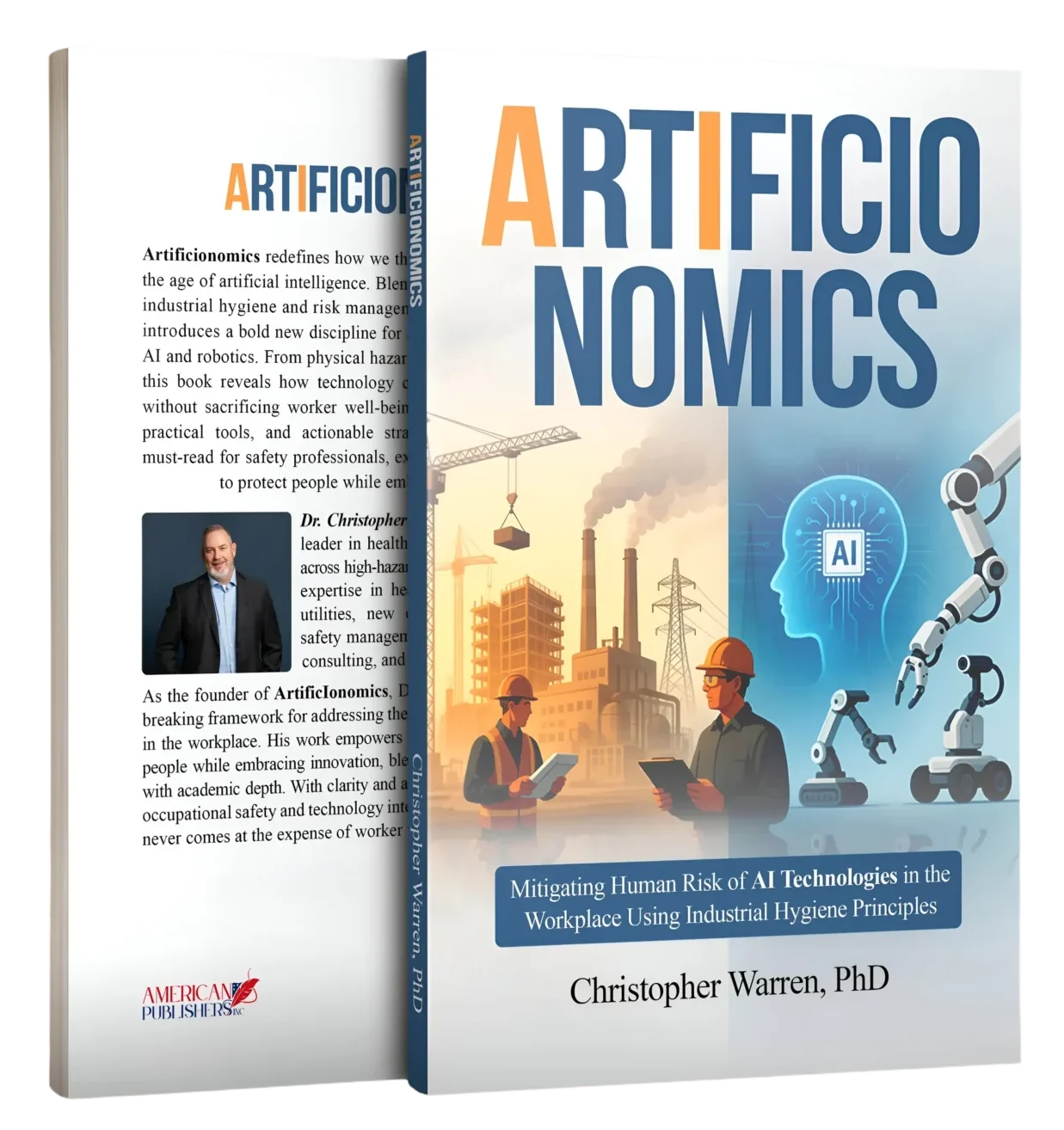
This is one of the most important concerns explored in Artificionomics: Mitigating Human Risk of AI Technologies in the Workplace Using Industrial Hygiene Principles by Christopher Warren, PhD. The book examines how modern workplace technologies affect not only productivity, but also stress, trust, dignity, autonomy, and mental health.
Algorithmic management can appear useful on the surface. It can organize workloads, predict staffing needs, reduce delays, and standardize decisions. Yet when poorly designed or poorly governed, it can create harmful pressure. Workers may feel constantly watched. They may struggle to understand how their performance is being judged. They may face unrealistic targets created by systems that do not account for fatigue, illness, personal circumstances, equipment problems, or the natural limits of human endurance.
Over time, this kind of management can damage morale. Employees may become anxious, disengaged, or fearful of making mistakes. A workplace that once relied on human conversation can begin to feel impersonal and unforgiving. When workers cannot question a decision or speak to a person with authority, trust begins to weaken. That loss of trust is not just an emotional issue. It is a safety concern.
Christopher Warren’s Artificionomics gives leaders a practical way to understand and manage these risks. Drawing from industrial hygiene principles, the book shows how organizations can identify, evaluate, and control hazards created by advanced workplace systems. It urges employers to look beyond output and ask deeper questions. Are workers being treated fairly? Do they understand how decisions are made? Is human oversight still present? Are privacy, mental health, and dignity being protected?
The book is especially valuable for safety professionals, executives, industrial hygienists, human resource leaders, and policymakers who must guide organizations through rapid technological change. It does not reject innovation. It calls for responsible implementation, where people remain central to every decision.
The rise of algorithmic management is not just a business trend. It is a workplace safety issue. If organizations want healthier, more resilient teams, they must ensure that technology supports workers rather than controls them.
Artificionomics provides the framework for doing exactly that. Christopher Warren’s book is a timely guide for any leader who understands that the future of work must be measured not only by efficiency, but by the well-being of the people who make that work possible.
Discover the framework for protecting people in AI-driven workplaces. Read ArtificIonomics today. https://www.amazon.com/dp/B0GFY4RL6B