Modern workplaces are evolving rapidly as new technologies become integral to everyday operations. These tools promise increased efficiency, streamlined processes, and enhanced decision-making. Yet, beneath these advantages lies a complex set of challenges that can affect the psychological health of employees. When organizations introduce systems that change how work is assigned, evaluated, or monitored, they must also consider how these changes influence the human experience.
One of the most significant issues organizations face today is the unintended psychological burden that technology can impose. Tools that monitor performance, optimize schedules, or automate certain tasks may seem beneficial on the surface. However, they can also create environments where workers feel constantly observed, pressured, or uncertain about their roles. This sense of surveillance and the fear of being evaluated by opaque systems can lead to stress, anxiety, and disengagement. Employees may begin to feel that their worth is measured solely by their outputs, rather than by their skills, judgment, or contributions to a team.
These psychological risks are not abstract. They manifest in everyday workplace interactions. For example, when shift assignments are generated by a tool without human oversight, employees may receive schedules that do not align with their personal needs or capacities. Without context or flexibility, such assignments can disrupt personal lives and create a sense of instability. Similarly, performance metrics that focus narrowly on quantifiable outputs may overlook the importance of collaboration, creativity, and problem solving. Workers who feel reduced to numbers can lose motivation and satisfaction in their work.
Another critical concern is the loss of autonomy. In traditional work settings, employees have a degree of control over how they manage their tasks and time. When systems dictate every aspect of work without explanation or room for input, people can feel stripped of agency. A sense of control over one’s work is closely tied to psychological well‑being. When that control is undermined, employees may experience helplessness, frustration, or loss of identity. This is particularly true in roles where human judgment and discretion are essential.
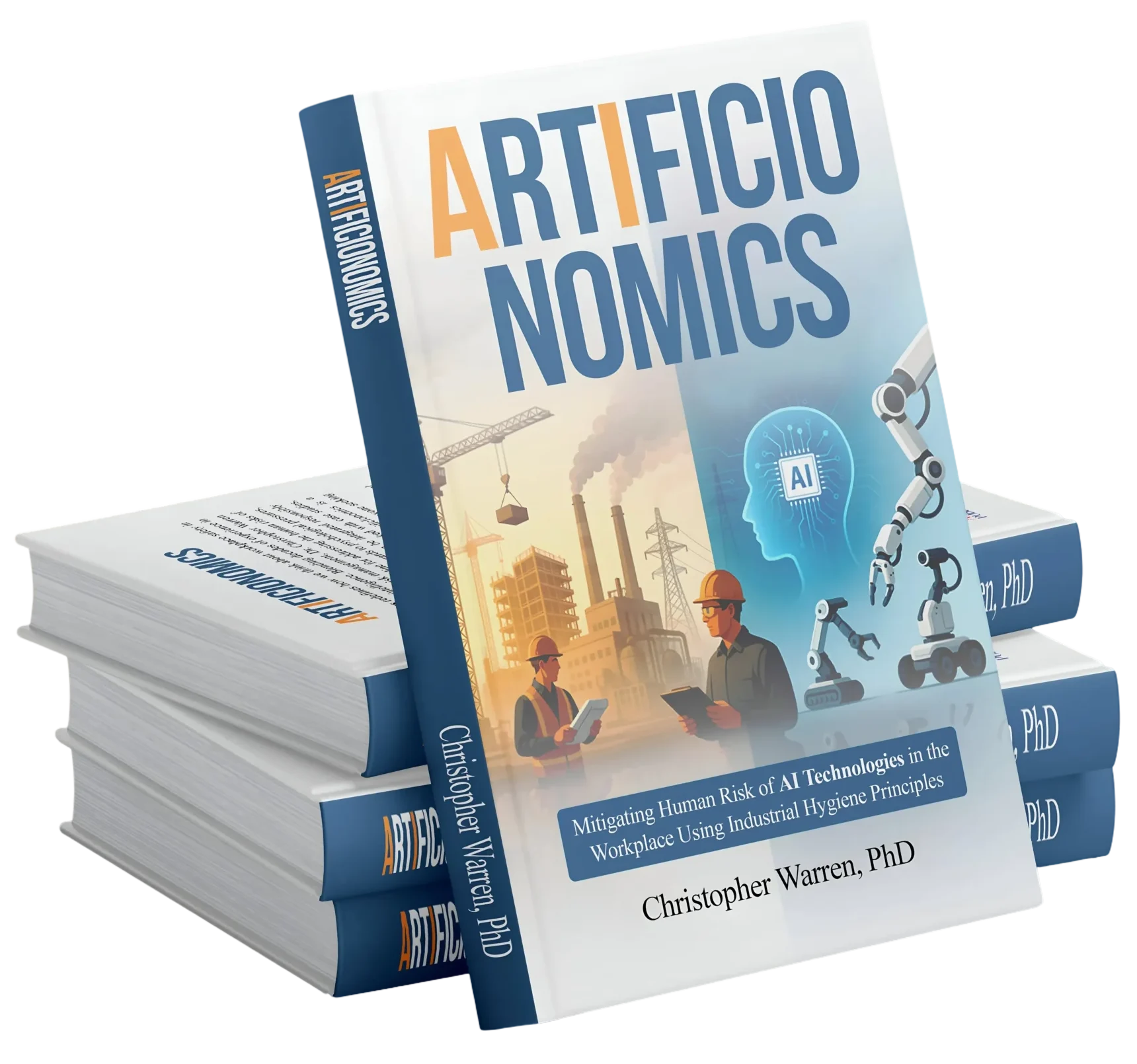
The book Artificionomics: Mitigating Human Risk of Intelligent Technologies in the Workplace Using Industrial Hygiene Principles by Christopher Warren offers a comprehensive approach to navigating these challenges. Drawing on the well‑established field of industrial hygiene, which has long focused on protecting workers from physical hazards, the book adapts these principles to address psychological and social risks associated with modern workplace technology. By treating human well‑being as a core component of risk assessment, organizations can develop strategies that safeguard both physical and mental health.
One of the key insights from the book is that risk management must be proactive rather than reactive. Waiting until problems surface in the form of burnout, conflict, or high turnover is neither ethical nor effective. Instead, organizations should systematically identify potential stressors, evaluate their impact, and implement controls that support dignity and resilience. This includes engaging workers in discussions about how tools affect their daily experience, ensuring transparency in how systems operate, and providing channels for feedback and adjustment.
Another central theme is the importance of integrating human judgment with technological tools. Systems should augment human capabilities, not replace human insight. When organizations combine data‑driven insights with empathy and contextual understanding, they can create environments where technology supports rather than undermines well‑being.
In a world where technological tools continue to transform work, Artificionomics serves as an essential guide for leaders committed to fostering healthy, respectful, and productive workplaces. By recognizing and addressing psychological risks, organizations can build cultures that honor human dignity while embracing innovation. This book is a vital resource for anyone seeking to navigate the complexities of workplace transformation with care and foresight.
Get your copy now. https://www.amazon.com/dp/B0GFY4RL6B