Artificial intelligence is often associated with efficiency, innovation, and digital transformation. Organizations adopt intelligent systems to streamline operations, optimize logistics, and improve decision making. Yet behind the interface of seamless automation lies a physical infrastructure with real environmental consequences. The environmental cost of artificial intelligence is measured not only in computational power, but in carbon emissions, water consumption, and human exposure across supply chains.
Large scale computing requires vast data centers operating continuously. These facilities consume enormous amounts of electricity, much of it still generated from carbon intensive sources. As demand for advanced modeling and automation grows, energy requirements increase proportionally. The carbon footprint associated with training and operating complex systems can rival that of entire industrial processes. When organizations celebrate digital efficiency without accounting for energy intensity, they risk shifting emissions rather than reducing them.
Water use is another overlooked dimension. Data centers rely heavily on cooling systems to prevent overheating. In many regions, this cooling requires substantial volumes of freshwater. Communities already facing water scarcity may experience additional strain as digital infrastructure expands. The environmental burden does not remain abstract. It intersects directly with public health and ecological stability.
Worker health is also implicated at multiple levels. Manufacturing the hardware that powers intelligent systems requires mining rare earth minerals and producing semiconductors through chemical intensive processes. Workers in extraction and production environments may face exposure to hazardous substances if safeguards are insufficient. In data center operations, employees manage high energy equipment in environments where thermal and electrical risks must be rigorously controlled.
Even in office settings, the indirect consequences are significant. As organizations scale intelligent systems, employees may be required to manage energy intensive infrastructure or maintain complex hardware environments. Environmental stressors, including heat management and equipment noise, can influence occupational conditions if not properly mitigated.
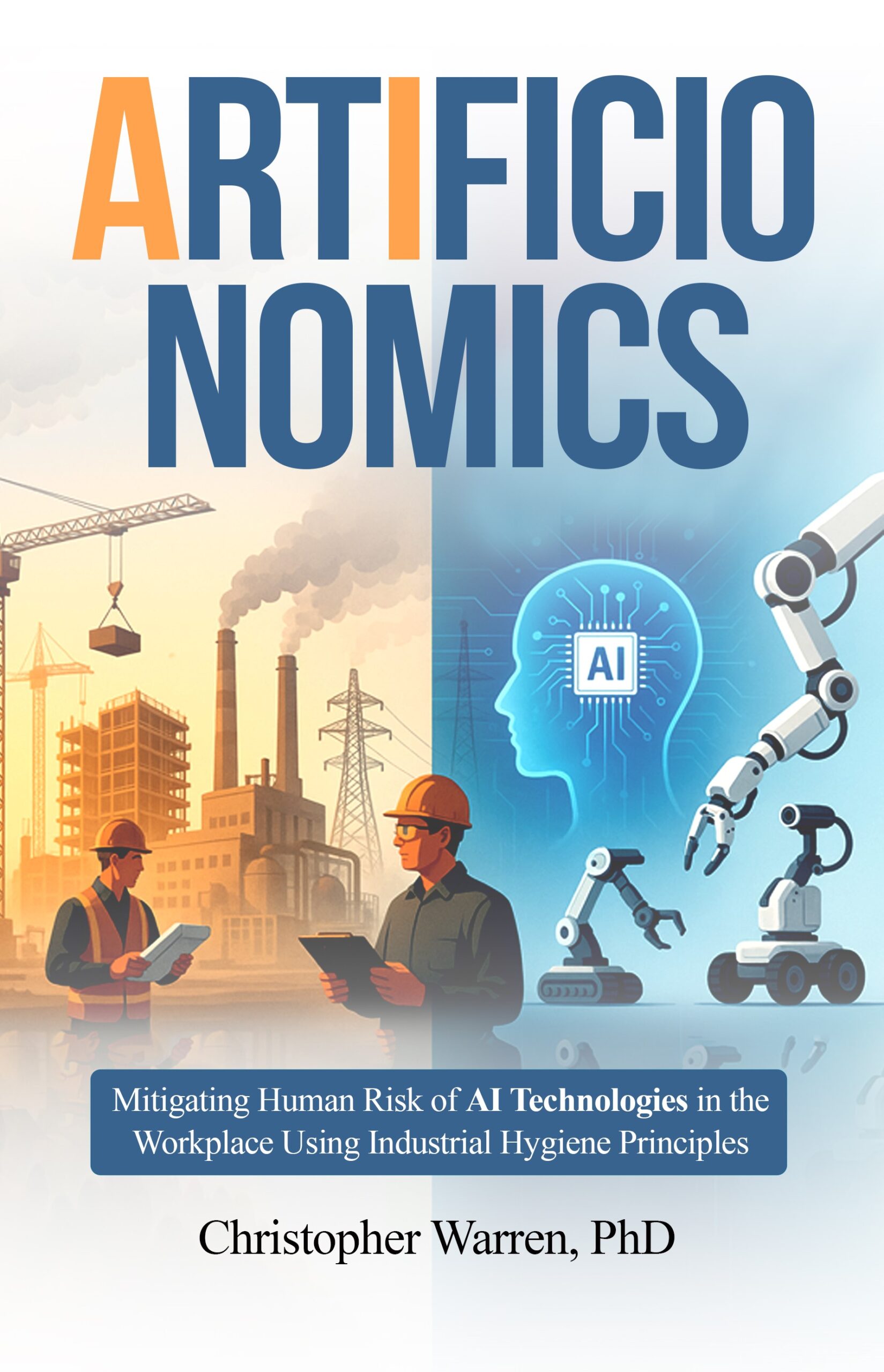
This integrated view of environmental and human exposure is central to Artificionomics: Mitigating Human Risk of AI Technologies in the Workplace Using Industrial Hygiene Principles by Dr. Christopher Warren. The book expands traditional industrial hygiene principles into the digital age, recognizing that intelligent systems are embedded within physical ecosystems. It emphasizes that anticipating, recognizing, evaluating, and controlling hazards must extend to energy consumption, resource strain, and supply chain exposure.
Responsible deployment requires environmental accounting alongside performance metrics. Organizations should evaluate energy sourcing, invest in efficiency improvements, and assess water impact before scaling operations. Procurement decisions should consider vendor sustainability practices and worker protection standards. Environmental responsibility and occupational safety must be aligned rather than treated as separate domains.
Artificial intelligence promises transformative capability. However, transformation without environmental stewardship can produce unintended harm. Carbon emissions contribute to climate instability. Water strain affects communities. Supply chain exposure impacts worker safety across global networks.
The environmental cost of artificial intelligence is not an argument against innovation. It is a call for disciplined governance. Sustainable progress demands that organizations measure impact comprehensively and integrate environmental safeguards into technology strategy. Artificionomics provides the framework to ensure that innovation advances without compromising ecological stability or worker health. In the age of intelligent systems, stewardship must extend from the data center to the planet.
Get your Copy Now on Amazon: https://www.amazon.com/dp/B0GFY4RL6B