What comes to your mind when you think of artificial intelligence? Does it represent opportunity and relief from repetitive tasks? Or, does it raise concerns about job security and fairness?
According to the World Economic Forum’s Future of Jobs Report 2023, 23 percent of jobs will be affected by churn in the next five years. Some roles will disappear while others will be created. This level of change can feel unsettling, particularly for those whose work is most directly affected.
Every major technological shift has sparked concern. From mechanization to computers, new tools have reshaped work. While disruption caused hardship for some, it also expanded economies and created new kinds of employment. AI follows a similar pattern, though at a faster pace.
Whether AI becomes a friend or a foe depends largely on how it is introduced and governed. Technology itself is neutral. The outcomes depend on human choices.
When AI is used to remove dangerous tasks, reduce physical strain, and support better planning, it can improve safety and quality of life. Predictive systems can help identify risks early. Automation can keep people out of hazardous environments. These are real benefits.
Problems arise when AI is treated as a replacement for judgment rather than a support. Systems that push an unrealistic pace, monitor excessively, or make opaque decisions can increase stress and erode trust. Workers who feel controlled rather than supported are less likely to engage fully or safely.
Another concern is fairness. AI systems learn from data. When that data reflects existing inequalities, outcomes can reinforce them. Without oversight, this can affect hiring, promotion, and workload distribution. Workers notice these patterns even when leaders do not.
Job displacement is also a real issue. While new roles will emerge, transitions are not always smooth. Workers need support, training, and honest communication. Ignoring these needs fuels fear and resistance.
The most constructive path forward treats AI as a shared responsibility. Leaders must involve workers in conversations about how systems are used. Clear explanations build understanding. Opportunities for feedback build trust.
Safety professionals and leaders also need tools to evaluate AI’s impact beyond efficiency. Understanding how systems affect mental load, decision-making, and recovery time helps identify risks early. This is where emerging frameworks, such as those explored in ArtificIonomics, provide practical guidance for balancing innovation with human needs.
AI is neither inherently a friend nor a foe. It becomes one or the other based on intent, design, and governance. When people are included, supported, and respected, AI can enhance work rather than threaten it. Similarly, when we value and prioritize AI over worker and employee safety, it can work against us.
In the end, with new and more advanced technology and AI integration, the future of work will continue to evolve. Whether AI plays a role in your job currently or not, you should be taking it into consideration, because having this understanding will strengthen the human side of work. When you know AI and integrate it alongside worker safety, your thoughtful leadership can make the difference and enable more productivity and fewer errors.
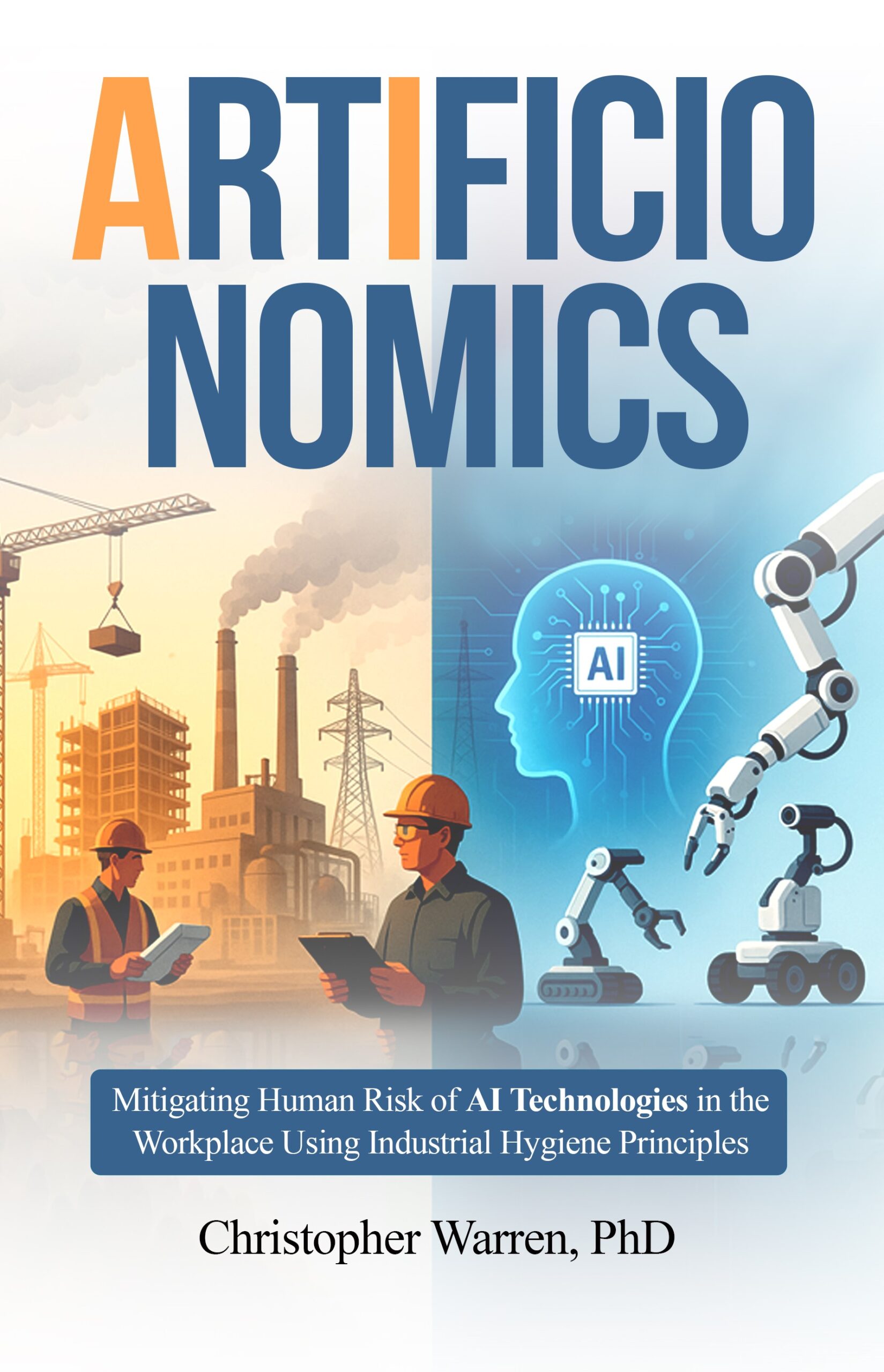
For those who are seeking to learn this, ArtificIonomics: Mitigating Human Risk of AI Technologies in the Workplace Using Industrial Hygiene Principles by Christopher Warren redefines how we think about workplace safety in the age of artificial intelligence.
Blending decades of experience in industrial hygiene and risk management, Dr. Christopher Warren introduces a bold new discipline for addressing the human risks of AI and robotics.
From physical hazards to psychological pressures, this book reveals how technology can be integrated responsibly without sacrificing worker well-being. Packed with case studies, practical tools, and actionable strategies, ArtificIonomics is a must-read for safety professionals, executives, and anyone seeking to protect people while embracing innovation.
Please visit the link for more information. https://artificionomics.com/.