Organizations are adopting artificial intelligence at a faster rate than their policies and safety programs can keep pace. Tools that schedule work, monitor performance, or predict risk are often introduced as operational upgrades necessary for organizations to sustain themselves in the modern, technologically advanced era. However, what gets less attention is how these systems affect people and how organizations will explain their decisions if something goes wrong.
This is where a single, coherent framework makes a significant difference, as without one, AI adoption tends to be fragmented. One team focuses on efficiency. Another looks at compliance. Safety reviews happen late, if at all. When problems surface, leaders struggle to answer basic questions. However, when we have a unified framework, it brings structure and helps us keep innovation moving forward.
For decades, organizations have managed complex risks using structured approaches. Chemical exposure, noise, ergonomics, and fatigue are not left to guesswork. They are anticipated, assessed, and controlled. AI introduces a new category of exposure, but the logic of risk management still applies.
A strong framework treats AI as an integral part of the work environment, rather than a separate technical feature. It inquires about how the system influences workload, decision timing, attention, and stress. It also asks who is affected and under what conditions. These questions help identify risks early, before they turn into incidents or disputes.
Defensibility is not only about lawsuits. It is about credibility. Regulators, insurers, workers, and customers increasingly expect organizations to explain how automated decisions are made. When AI influences safety outcomes, scheduling, or performance management, those explanations matter.
A defensible AI program shows intent. It demonstrates that leadership considers human impact, not just output. It demonstrates that risks were evaluated and that oversight is in place. When something goes wrong, the organization can point to a process rather than scrambling for answers. Defensibility also supports internal trust. Workers are more likely to accept new systems when they know decisions were thoughtful and accountable. Transparency reduces fear and resistance.
Another advantage of a single framework is consistency, as without it, different departments may adopt AI in different ways, creating uneven risk. For example, one site may involve safety early, while others may not.
Many organizations address AI risk only after problems have already appeared. Complaints rise. Errors occur. Trust declines. A unified framework shifts the focus to design and encourages teams to consider the human impact before deployment, rather than after damage is done. That proactive stance also reduces costly retrofits and reputational harm, enabling organizations to harness the benefits of AI without compromising stability.
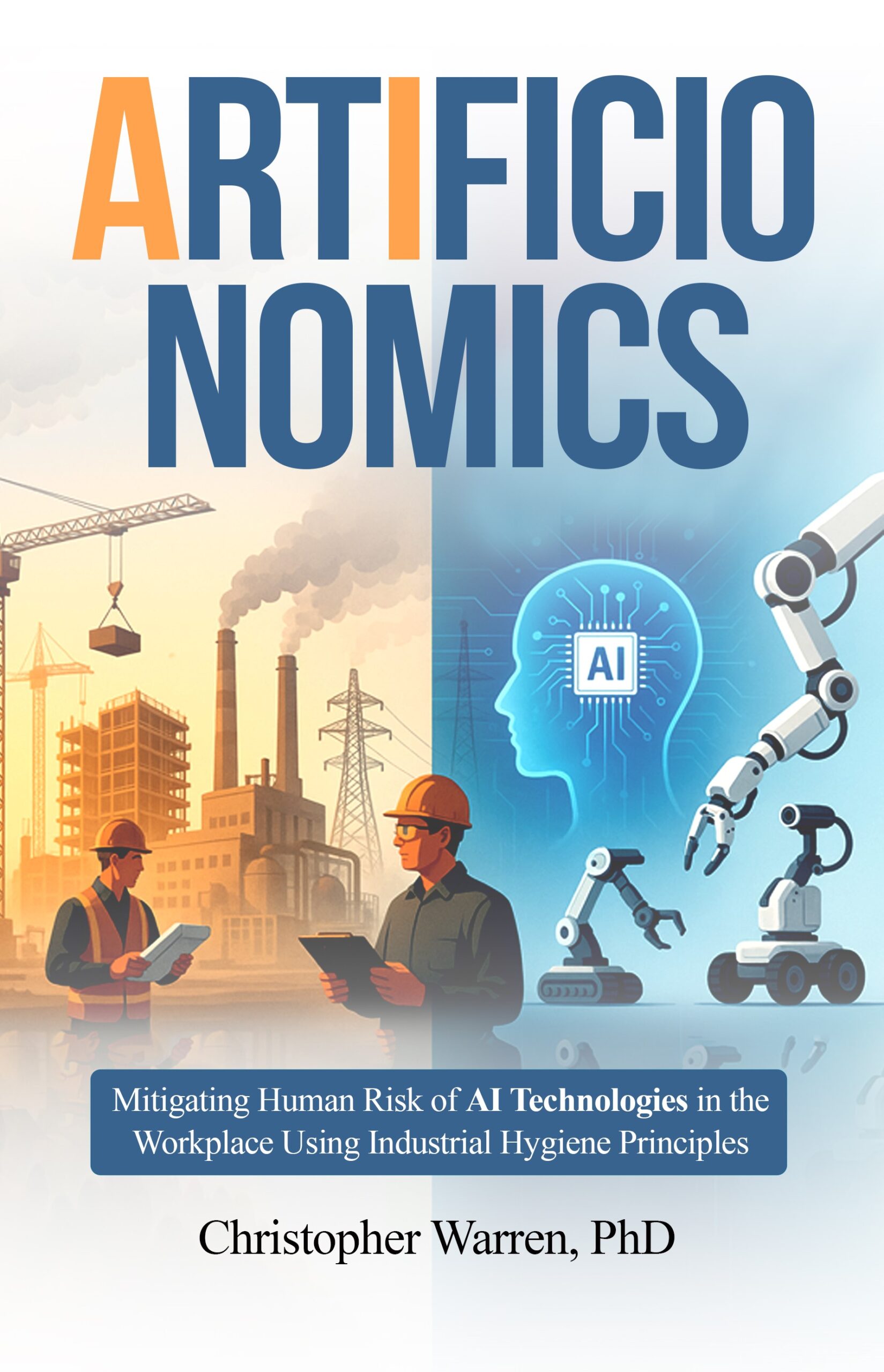
Frameworks like the one explored in ArtificIonomics: Mitigating Human Risk of AI Technologies in the Workplace Using Industrial Hygiene Principles offer practical guidance for this kind of integration. The book will help safety professionals and leaders connect familiar safety thinking with modern systems, enabling organizations to move forward with confidence while integrating AI and robotics into their daily operations without compromising workers’ safety.
Artificionomics redefines how we think about workplace safety in the age of artificial intelligence. Drawing on decades of experience in industrial hygiene and risk management, Dr. Christopher Warren introduces a groundbreaking new discipline for addressing the human risks associated with AI and robotics. From physical hazards to psychological pressures, this book reveals how technology can be integrated responsibly without sacrificing worker well-being. Packed with case studies, practical tools, and actionable strategies, ArtificIonomics is a must-read for safety professionals, executives, and anyone seeking to protect people while embracing innovation.
For more information, please visit https://artificionomics.com/.