Workplace safety has always depended on a disciplined process: identify hazards, evaluate exposure, and control risk before harm occurs. For generations, this approach has protected workers from chemicals, noise, heat, machinery, dust, and ergonomic strain. Now, the same proven principles must be applied to a new and rapidly growing category of workplace danger.
Modern workplaces are being transformed by intelligent tools, robotics, monitoring platforms, predictive systems, and automated decision processes. These technologies can improve efficiency and remove people from dangerous tasks, but they can also create hidden risks. Workers may experience stress from constant monitoring, fatigue from complex dashboards, anxiety over job security, loss of autonomy, privacy concerns, biased decisions, or pressure to follow machine generated instructions even when their own judgement says otherwise.
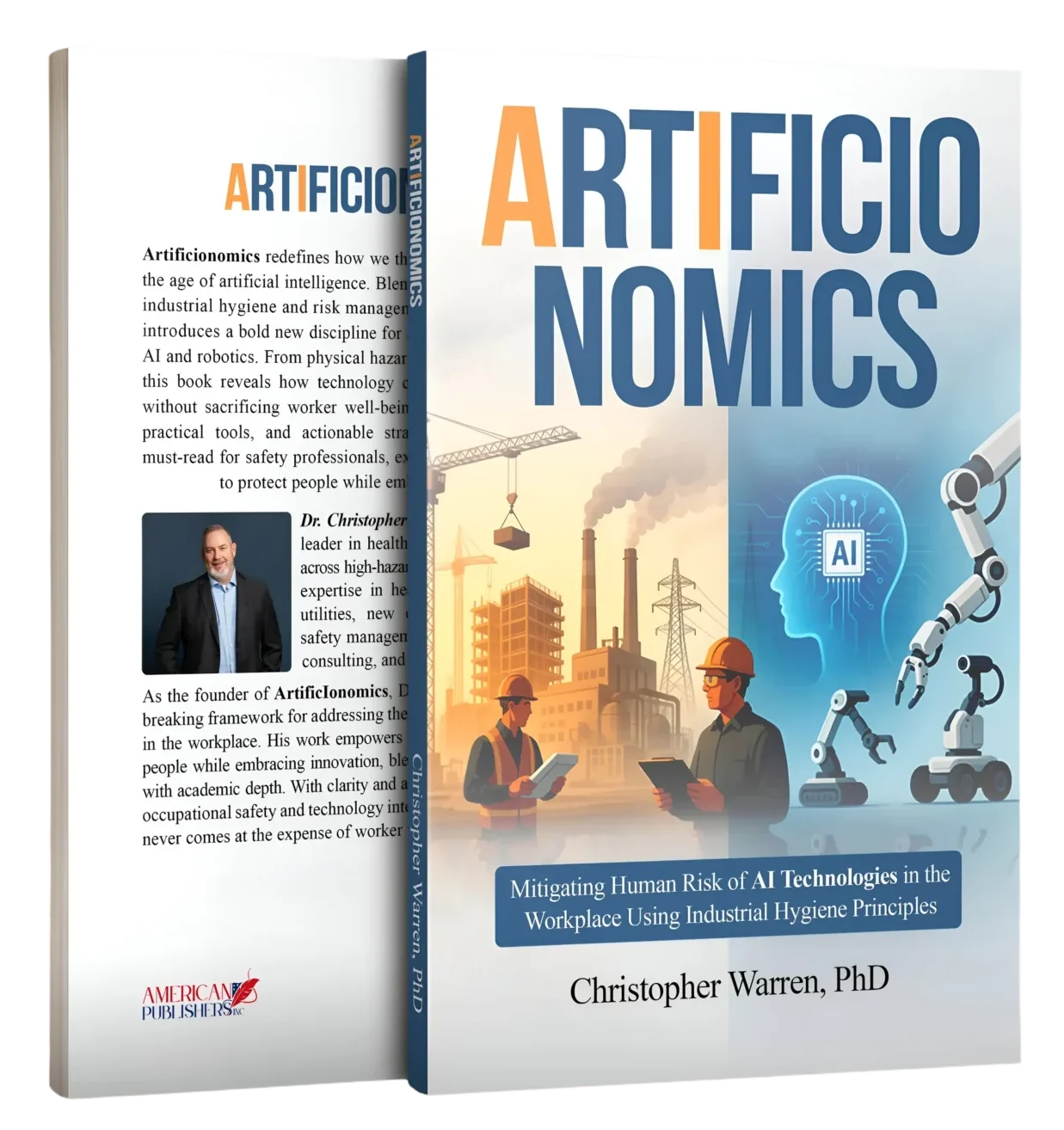
This is why Artificionomics: Mitigating Human Risk of AI Technologies in the Workplace Using Industrial Hygiene Principles by Christopher Warren, PhD, is such an important and timely book. It brings the trusted foundation of industrial hygiene into the modern technology driven workplace and shows leaders how to protect people in environments where risk is no longer only physical.
Industrial hygiene begins with identification. In the past, this might have meant recognizing a chemical exposure or unsafe machine. Today, it may mean identifying cognitive overload, algorithmic pressure, surveillance stress, or unclear human machine boundaries. These hazards are not always visible, but they are real. If ignored, they can weaken morale, increase mistakes, damage mental health, and reduce trust across an organization.
The next step is evaluation. Christopher Warren shows that organizations must measure more than productivity and performance. They must also examine worker well-being, stress levels, autonomy, privacy, fairness, training, and the quality of human oversight. A tool that improves output but harms dignity or judgement cannot be considered a true success.
Control is where industrial hygiene becomes most powerful. Through the hierarchy of controls, organizations can remove harmful systems, replace intrusive tools with safer alternatives, design clearer interfaces, establish transparent policies, provide meaningful training, and create support systems for workers facing new pressures. These controls turn innovation into responsible practice.
The strength of Artificionomics is that it does not reject technological progress. It teaches organizations how to manage progress wisely. Christopher Warren gives safety professionals, executives, industrial hygienists, policymakers, and workplace leaders a practical framework for asking the right questions before new systems are introduced. How will this affect workers? What risks are being created? Who is accountable? What safeguards are in place? How can people remain informed, protected, and empowered?
As workplaces continue to change, safety must change with them. The future of occupational health will require more than traditional inspections and compliance checklists. It will require a deeper understanding of how technology affects the human body, mind, and workplace culture.
Artificionomics offers that understanding. For any organization serious about safer innovation, Christopher Warren’s book is an essential guide to protecting people in the next era of work.
Discover the framework for protecting people in AI-driven workplaces. Read ArtificIonomics today. https://www.amazon.com/dp/B0GFY4RL6B