Artificial intelligence is often evaluated through the lens of performance. Does it improve efficiency? Does it reduce cost? Does it increase speed and precision? While these questions matter, they overlook a more foundational principle. The true measure of intelligent systems is not only what they can achieve, but what they prevent. Ethical AI is preventive AI.
Prevention has long defined the strongest safety cultures. In industrial hygiene, hazards are anticipated before exposure occurs. Controls are layered to eliminate or reduce risk at the source. Protective systems are not reactive. They are proactive. The same logic must apply to intelligent systems integrated into modern workplaces.
Ethics in AI is frequently framed as an abstract conversation about fairness, bias, or transparency. Yet ethics becomes meaningful only when it translates into operational safeguards. A system that prevents harm through careful design, measurable oversight, and enforceable limits is ethical in practice. A system deployed without structured controls, even if well intentioned, exposes workers and organizations to avoidable risk.
Intelligent systems influence hiring decisions, workload distribution, robotics coordination, performance evaluation, and real time operational control. Without preventive governance, these tools can introduce physical hazards, cognitive overload, psychosocial stress, and erosion of professional judgment. Automation bias may lead individuals to accept flawed outputs. Continuous monitoring may heighten anxiety. Poorly designed human machine interaction may increase mechanical risk.
Preventive ethics demands that organizations identify these exposures before deployment. It requires risk assessment embedded into procurement. It requires transparency regarding system limitations. It requires layered controls, override mechanisms, and continuous monitoring. Most importantly, it requires worker participation in evaluation and feedback.
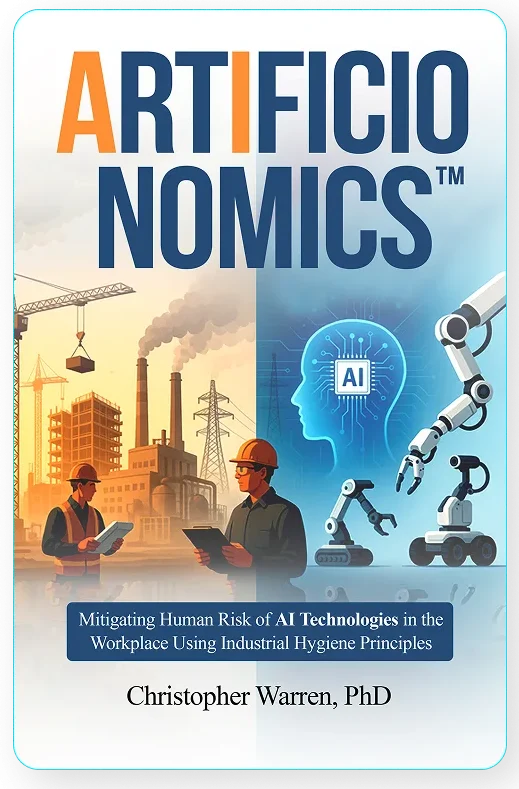
This preventive framework is central to Artificionomics: Mitigating Human Risk of AI Technologies in the Workplace Using Industrial Hygiene Principles by Dr. Christopher Warren. The book reframes AI governance as an occupational health responsibility and applies time tested principles of hazard anticipation, recognition, evaluation, and control to intelligent systems. Ethics is not treated as aspiration. It is operationalized through measurable oversight and structured accountability.
When ethics becomes preventive, organizations move beyond compliance. They build trust. They reduce legal exposure. They protect mental health and physical safety. They ensure that innovation enhances human capability rather than undermining it.
Reactive responses to technological harm are costly. Incidents damage morale, reputation, and stability. Preventive design reduces these downstream consequences. It aligns progress with dignity and safety from the outset.
Artificial intelligence will continue to evolve and expand. The defining leadership question is not whether systems are powerful, but whether they are governed with foresight. Ethical AI does not wait for harm to occur. It is designed to prevent it.
Artificionomics provides the roadmap for transforming ethics into disciplined prevention. In the age of intelligent systems, safeguarding people is not a secondary concern. It is the foundation of sustainable innovation.
Get your Copy Now on Amazon: https://www.amazon.com/dp/B0GFY4RL6B.