Workplaces around the world are undergoing a profound transformation as new technologies become more deeply embedded in everyday operations. These tools can bring significant gains in efficiency, but they also raise critical questions about how work is experienced and how the people who do the work are treated. A future workplace that truly supports staff must be designed around human dignity and safety, not solely around metrics and outputs.
A worker‑centered approach begins with a simple but powerful premise: technology should serve people, not the other way around. For too long, systems have been deployed in ways that prioritize efficiency while overlooking the nuanced, lived experience of employees. This imbalance can lead to increased stress, unclear expectations, and feelings of dis-empowerment. By contrast, workplaces that prioritize dignity create conditions where employees feel respected, valued, and safe. This approach enhances engagement, reduces turnover, and builds resilience across the organization.
Designing workplaces with dignity and safety at the forefront involves rethinking how decisions are made. It starts with listening to staff about their needs and concerns. Workers are the experts in their own experience, and their input should shape how tools are integrated into their daily routines. When people feel that their voices matter, trust grows. Trust, in turn, supports open communication and a willingness to adapt practices that are not working well.
Another essential element is transparency. Workers should understand how systems affect their work, what data is being collected, and how insights will be used. This transparency mitigates fears of unfair treatment or hidden evaluations. Respect for privacy is a cornerstone of dignity. Policies that clearly outline data use, limits on monitoring, and safeguards against misuse help maintain a healthy balance between organizational needs and individual rights.
Safety in the modern workplace extends beyond physical hazards to include psychological and social well‑being. Tools that influence scheduling, task allocation, or performance evaluation must be scrutinized for unintended effects on morale and stress levels. Regular review of these systems, with input from a cross‑section of employees, ensures that they support well‑being rather than undermine it. If patterns emerge that suggest undue pressure or inequity, organizations must be prepared to adjust or remove problematic practices.
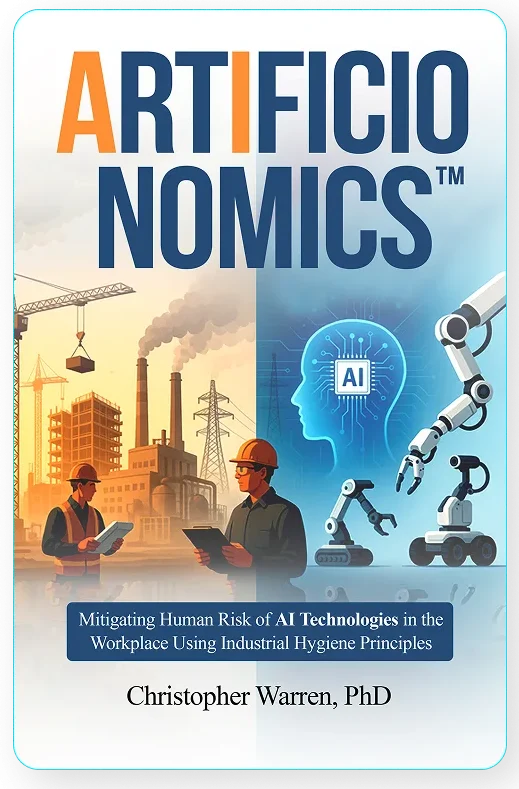
In the book Artificionomics: Mitigating Human Risk of Intelligent Technologies in the Workplace Using Industrial Hygiene Principles, Christopher Warren presents a framework that helps leaders navigate these complex issues. Drawing on time‑tested principles from industrial hygiene, the book adapts risk assessment and control strategies to the modern context where digital tools play a central role. It offers practical guidance on identifying risks, evaluating their impact on people, and implementing controls that protect dignity and safety.
One of the book’s key contributions is its emphasis on proactive risk mitigation. Rather than waiting for problems to manifest, organizations can use structured approaches to anticipate and address potential harms. This shift from reactive fixes to intentional design creates environments where people can thrive.
Ultimately, a worker‑centered future is not just a moral imperative it is a strategic advantage. Organizations that design for dignity and safety foster a culture of respect and resilience, attracting and retaining talent in a competitive landscape. Artificionomics equips leaders with the tools they need to realize this vision and build workplaces where every individual can succeed.
Get your copy now. https://www.amazon.com/dp/B0GFY4RL6B