Artificial Intelligence is transforming the workplace faster than any technology in recent memory.
Executives see opportunity. Investors see growth. Technology teams see innovation.
But many employees see something else entirely:
Uncertainty.
As AI becomes more integrated into daily operations, workers across industries are asking difficult questions. Will my job change? Will my skills become obsolete? Will an algorithm evaluate my performance? Will a machine eventually replace me?
Whether those fears are justified or not, one reality is clear: employee anxiety about AI is growing. And organizations that ignore it do so at their own risk.
The Fear Behind the Technology
Much of the public conversation around AI focuses on productivity, efficiency and automation. While those benefits are real, employees often experience AI differently.
For many workers, AI represents disruption.
They see headlines predicting job displacement. They hear about companies automating tasks once performed by people. They witness new technologies making decisions that were traditionally made by managers or teams.
Even when organizations have no plans for workforce reductions, employees may still worry about their future role, value and relevance.
Fear thrives in uncertainty.
When workers don’t understand how AI will affect them, they often fill the information gap with worst-case scenarios.
Why Leaders Should Pay Attention
Some leaders dismiss AI-related anxiety as resistance to change.
That would be a mistake.
Employee concerns about AI are not simply emotional reactions. They can directly impact organizational performance.
When workers feel threatened by technology, they may become less engaged, less collaborative and less willing to support transformation initiatives. Trust can erode. Productivity can decline. Adoption efforts may face resistance.
In some cases, employees become so focused on protecting their position that they stop focusing on innovation altogether.
The result is a workforce that feels disconnected from the very future the organization is trying to build.
Communication Is the First Control Measure
One of the most effective ways to reduce fear is transparency.
Employees need clear answers about why AI is being introduced, how it will be used and what role humans will continue to play.
Leaders should communicate early and often.
They should explain how AI will support employees rather than simply replace tasks. They should discuss workforce development plans, training opportunities and the organization’s long-term vision.
Silence creates uncertainty.
Transparency builds trust.
Invest in People, Not Just Technology
Organizations often invest heavily in AI systems while underinvesting in workforce readiness.
This creates an imbalance.
Employees need training, support and opportunities to develop new skills that complement emerging technologies. They need confidence that they can adapt and succeed alongside AI.
The most successful organizations recognize that technology transformation and workforce transformation must happen together.
AI should empower people, not leave them behind.
A New Perspective on AI Risk
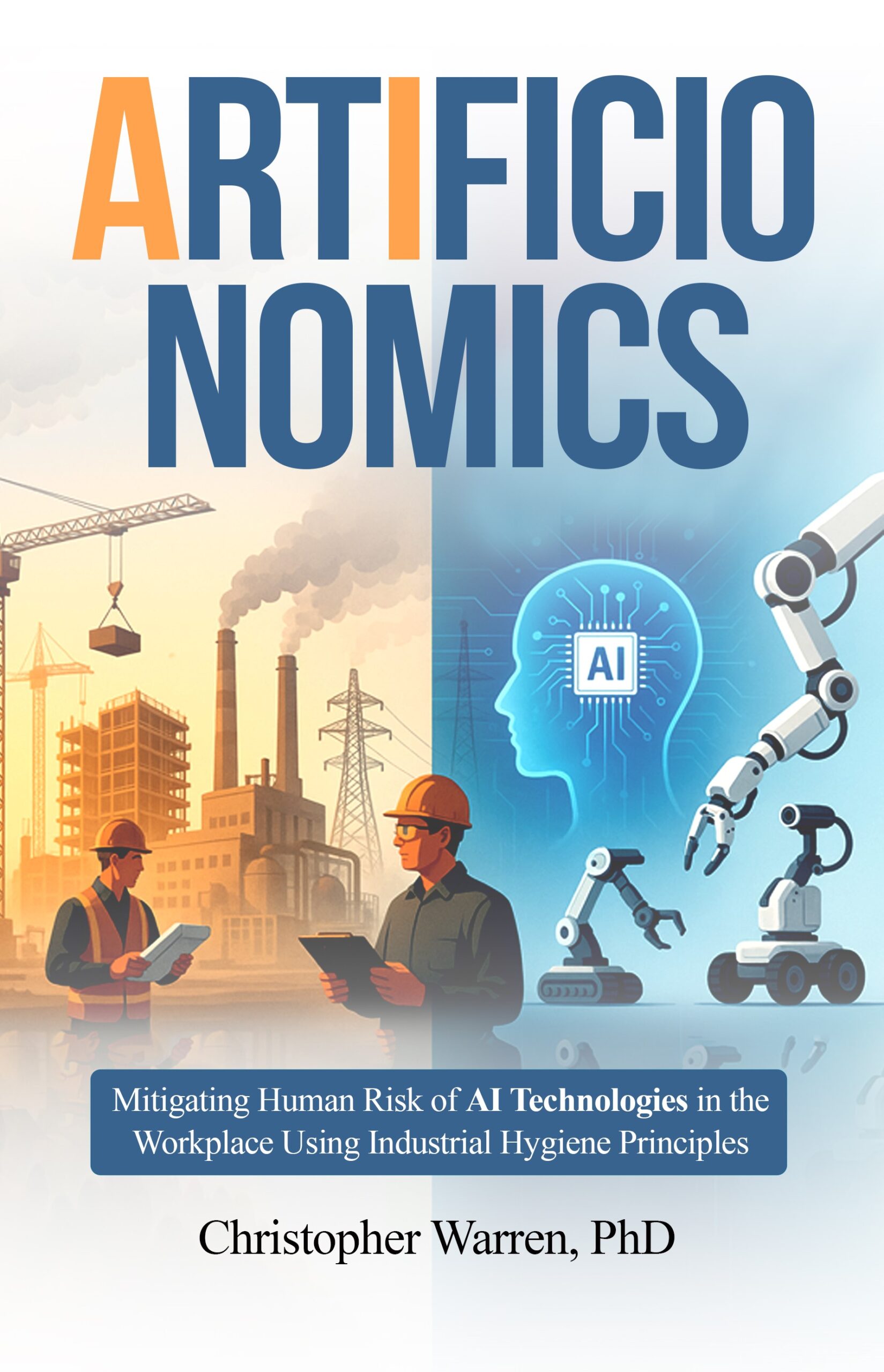
These challenges are explored in Artificionomics: Mitigating Human Risk of AI Technologies in the Workplace Using Industrial Hygiene Principles by Christopher Warren, PhD.
In the book, Warren introduces Artificionomics, a groundbreaking framework for identifying, evaluating and controlling the human risks associated with artificial intelligence and robotics. Drawing from industrial hygiene principles, the framework encourages leaders to view AI not only as a technology initiative but also as a workplace health, safety and well-being issue.
This perspective shifts the conversation from “How do we deploy AI?” to a more important question:
How do we deploy AI while protecting the people affected by it?
Leading Through the AI Transition
The future of work will be shaped by artificial intelligence. But the success of that future will depend on leadership.
Employees don’t need leaders who have all the answers.
They need leaders who listen, communicate openly, invest in development and recognize the human side of technological change.
AI may transform jobs, workflows and industries.
But organizations that succeed will remember that their greatest asset is not artificial intelligence.
It’s human intelligence.
And protecting that resource is what Artificionomics is all about.