Artificial Intelligence is transforming the workplace at an extraordinary pace.
Employees are using AI to write reports, analyze data, automate workflows, manage schedules, monitor operations and make decisions faster than ever before. Organizations are embracing intelligent technologies to increase productivity, improve efficiency and remain competitive in an increasingly digital economy.
But amid the excitement surrounding AI, a new workplace threat is quietly emerging.
It’s not a software malfunction.
It’s not a cybersecurity breach.
It’s human exhaustion.
As organizations accelerate AI adoption, many employees are experiencing a growing combination of AI fatigue, burnout and cognitive overload challenges that could become some of the most significant workplace health risks of the coming decade.
When More Technology Means More Mental Work
One of the biggest misconceptions about AI is that it automatically reduces human effort.
In reality, many AI systems require workers to constantly interpret information, verify outputs, monitor recommendations and make rapid decisions based on machine-generated insights.
Instead of eliminating mental demands, AI often changes them.
Employees may find themselves reviewing large volumes of AI-generated content, managing multiple intelligent systems, responding to automated alerts or making decisions based on increasingly complex streams of data.
The result is a workplace where mental workload can increase even as physical workload decreases.
Over time, this can create significant cognitive strain.
The Rise of AI Fatigue
AI fatigue occurs when employees become mentally exhausted from continuous interaction with intelligent technologies.
Workers may feel overwhelmed by constant notifications, algorithm-driven recommendations, automated workflows and the expectation to adapt to ever-changing digital tools.
What begins as a productivity enhancer can gradually become a source of frustration and exhaustion.
Employees may struggle to keep pace with new systems, question the accuracy of AI outputs or feel pressured to maintain machine-level performance expectations.
This fatigue often goes unnoticed because it doesn’t appear in traditional safety reports.
Yet its impact can be profound.
Burnout in the Age of Algorithms
Burnout has long been associated with excessive workloads and chronic workplace stress.
AI can unintentionally intensify both.
In environments where algorithms track productivity, measure performance in real time and optimize workflows down to the minute, employees may feel constant pressure to perform without pause.
The psychological effect can be significant.
Workers may experience anxiety, reduced autonomy, emotional exhaustion and a growing sense that they are working for technology rather than being supported by it.
When people feel like they must keep up with machines, burnout often follows.
Why Cognitive Overload Matters
Cognitive overload occurs when the brain is asked to process more information than it can effectively manage.
As AI systems generate increasing amounts of data, recommendations and insights, employees can become overwhelmed by the sheer volume of information they are expected to interpret.
This can lead to decision fatigue, reduced concentration, mistakes, lower productivity and increased stress.
Ironically, technology designed to improve decision-making can sometimes make decision-making more difficult.
A New Framework for a New Workplace Risk
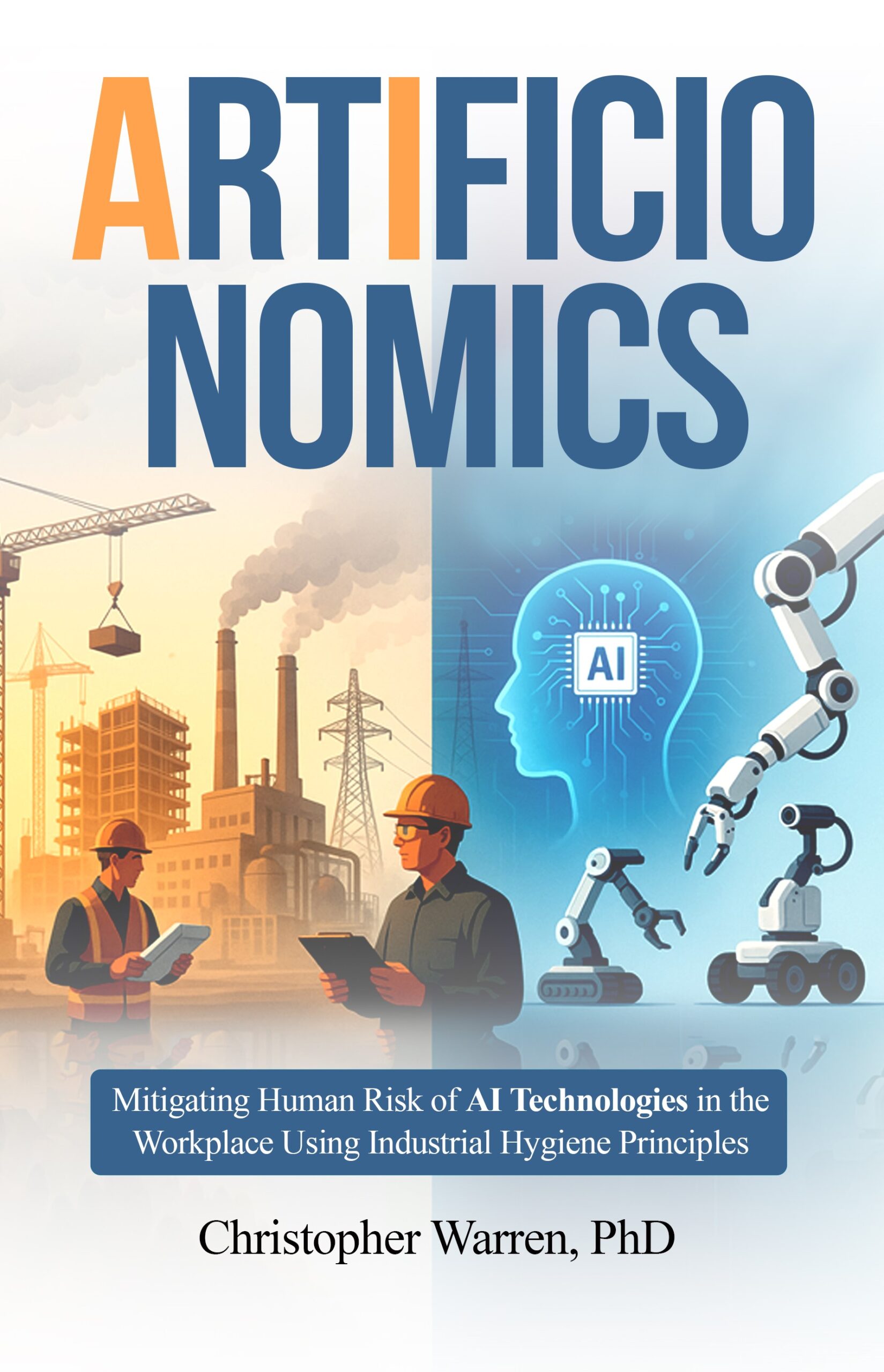
These emerging challenges are at the heart of Artificionomics: Mitigating Human Risk of AI Technologies in the Workplace Using Industrial Hygiene Principles by Christopher Warren, PhD.
In the book, Warren introduces Artificionomics, a groundbreaking framework that examines the human risks associated with artificial intelligence and robotics. Applying the proven principles of industrial hygiene, Artificionomics helps organizations identify, evaluate and control risks that affect employee well-being, including psychological stress, cognitive fatigue, burnout and human-machine interaction challenges.
Rather than focusing solely on what AI can do, the framework asks a critical question:
What is AI doing to the people who use it?
Protecting Human Performance in the AI Era
The future of work will undoubtedly involve more AI.
But successful organizations will recognize that employee well-being is not separate from productivity; it is essential to it.
As AI continues to evolve, leaders must pay attention not only to efficiency metrics but also to the mental and cognitive demands placed on their workforce.
The organizations that thrive will be those that embrace innovation while protecting the people behind it.
That balance between technological progress and human well-being is the foundation of Artificionomics and it may be one of the most important workplace priorities of the AI age.