Artificionomics: Mitigating Human Risk of AI Technologies in the Workplace Using Industrial Hygiene Principles
As artificial intelligence rapidly enters the workplace, organizations face a growing disconnect. AI systems promise efficiency and insight, yet worker safety frameworks struggle to keep pace. Artificionomics addresses this gap head offering a thoughtful and actionable guide to managing AI-driven risk through the lens of occupational health and safety.
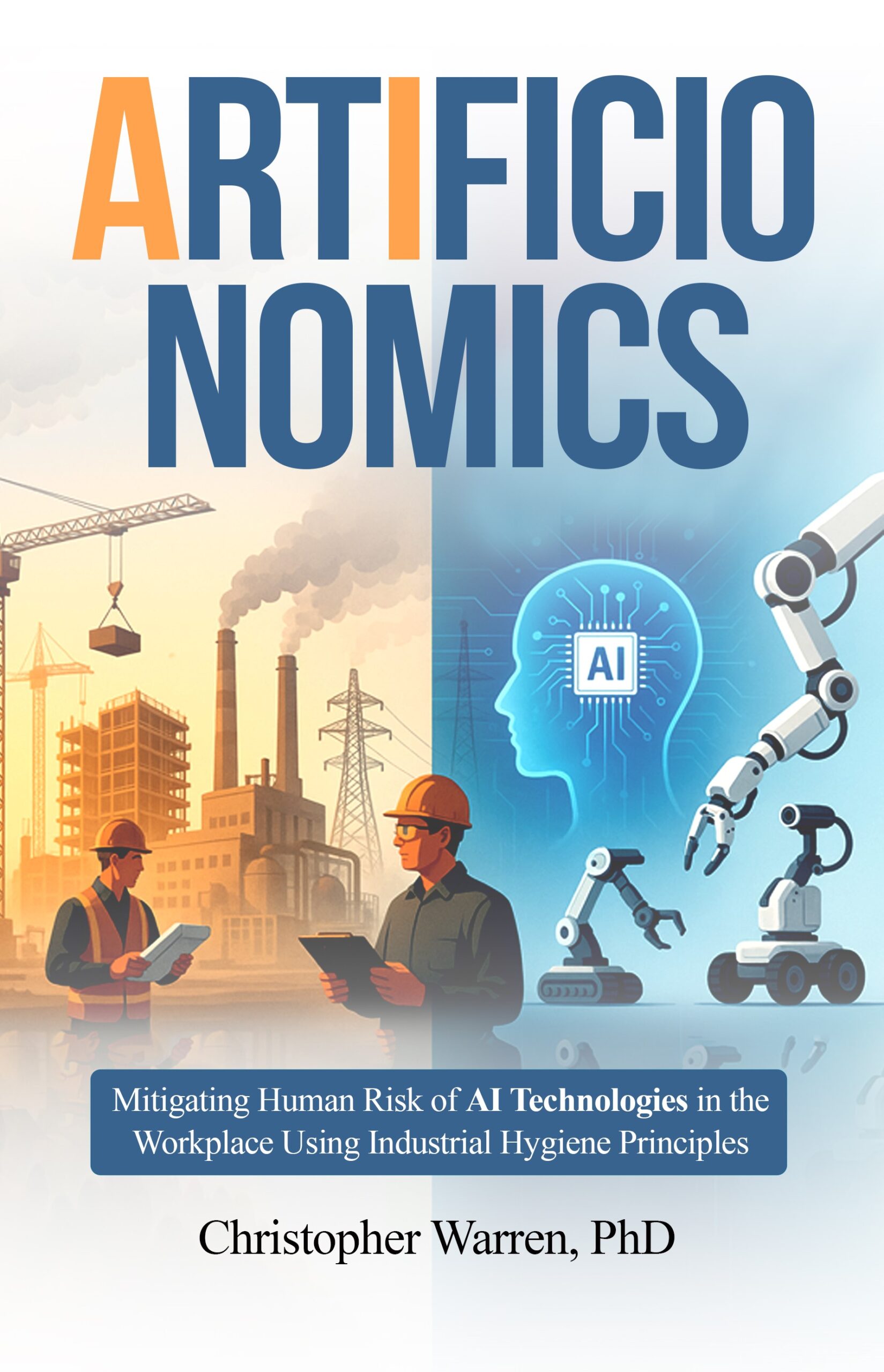
Many discussions about AI risk remain confined to ethics panels or policy debates. However, Warren’s book is refreshingly practical. It speaks directly to how AI is already influencing work through automated scheduling, monitoring, decision support, and robotics.
Rather than treating AI risk as speculative, the book documents how it is embedded in daily operations and why ignoring it exposes organizations to harm, liability, and workforce distrust.
The central insight of Artificionomics is deceptively simple. AI systems create exposures. Those exposures can be anticipated, measured, evaluated, and controlled.
By applying industrial hygiene logic to digital environments, Warren creates a common language that safety professionals can immediately use. AI becomes part of the exposure inventory rather than an external technology issue. This reframing alone makes the book highly valuable.
Another strength of the book is its clear discussion of regulation and liability. Warren explains how agencies such as OSHA, NIOSH, the EEOC, and others are already applying existing authority to AI-related workplace risks.
This section is particularly useful for leaders who assume AI regulation is years away. The book demonstrates that responsibility already exists and that documentation, oversight, and governance are no longer optional.
Importantly, the book does not portray AI as inherently dangerous. It recognizes AI’s potential to reduce exposure, predict hazards, and improve emergency response.
What it emphasizes is balance. Without governance, the same systems that protect workers can also harm them. Artificionomics provides the structure needed to manage both outcomes responsibly.
Despite the complexity of the topic, the writing remains accessible. Technical concepts are explained clearly, and examples are grounded in real workplace scenarios. This makes the book suitable for a wide audience without sacrificing depth.
Final Assessment
Artificionomics: Mitigating Human Risk of AI Technologies in the Workplace Using Industrial Hygiene Principles fills a critical gap in the literature on AI and work. It gives safety professionals the tools to engage with AI meaningfully and gives leaders a framework to deploy technology without undermining human well-being.
This is a book that will shape how organizations think about AI risk for years to come.
For more details visit our website: https://artificionomics.com/