Technology should make work safer, not colder, faster, and more stressful for the people expected to use it. As intelligent tools become part of everyday operations, organizations face a critical responsibility. They must design systems that support workers, protect judgement, reduce strain, and strengthen trust.
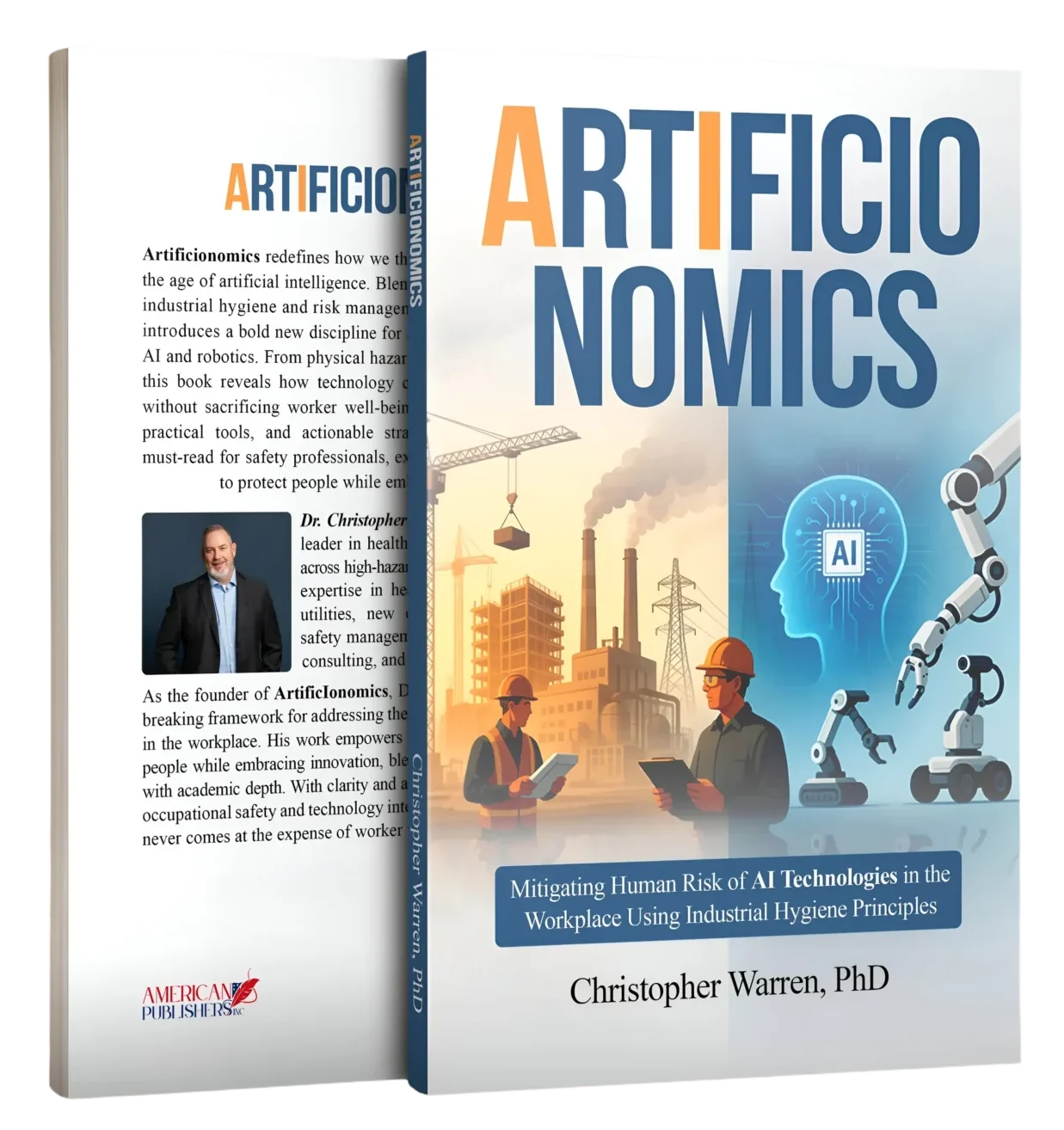
This is the core message of Artificionomics: Mitigating Human Risk of AI Technologies in the Workplace Using Industrial Hygiene Principles by Christopher Warren, PhD. The book explains why workplace technology must be built around human safety, dignity, and well-being, not only speed, output, and cost reduction.
A human centered system begins with a simple principle: people are not obstacles to efficiency. They are the reason safety matters. When advanced tools are introduced without worker input, clear training, transparent policies, or meaningful oversight, they can create hidden hazards. Employees may feel monitored rather than supported. They may lose confidence in their professional judgement. They may face cognitive overload from constant alerts, pressure from automated productivity targets, or stress from decisions they cannot question.
Safer workplaces require a different approach. Leaders must involve workers before new systems are deployed. Safety professionals must assess both physical and psychological risks. Engineers and managers must design tools that are clear, explainable, and easy to challenge when something seems wrong. Employees must know who is responsible, how decisions are made, and what protections are in place when technology fails.
Christopher Warren’s Artificionomics gives organizations a practical framework for doing this well. Drawing from industrial hygiene principles, the book shows how to identify, evaluate, and control the human risks created by intelligent workplace systems. It encourages leaders to move beyond narrow performance goals and ask deeper questions. Does this tool protect autonomy? Does it reduce harm? Does it preserve privacy? Does it strengthen trust between workers and management? Does it keep human judgement in the loop when consequences matter?
The value of the book lies in its balance. It does not reject innovation. It teaches responsible innovation. It recognizes that robotics, monitoring tools, predictive systems, and automated platforms can improve safety when designed and governed properly. But it also warns that technology without human centered safeguards can damage morale, increase stress, and create new forms of workplace harm.
For safety professionals, executives, industrial hygienists, human resource leaders, and policymakers, Artificionomics is an essential guide to the future of work. It provides the language and structure needed to build workplaces where technology serves people, not the other way around.
The safest workplace of the future will not be the one with the most advanced tools. It will be the one where those tools are designed with people at the center.
Discover the framework for protecting people in AI-driven workplaces. Read ArtificIonomics today. https://www.amazon.com/dp/B0GFY4RL6B