Not every advanced workplace tool improves the workplace. Some systems support people, reduce risk, and make difficult tasks easier. Others increase pressure, weaken trust, and make employees feel monitored, judged, or replaceable. The difference is not always found in the technology itself. It is found in how it is designed, governed, explained, and used.
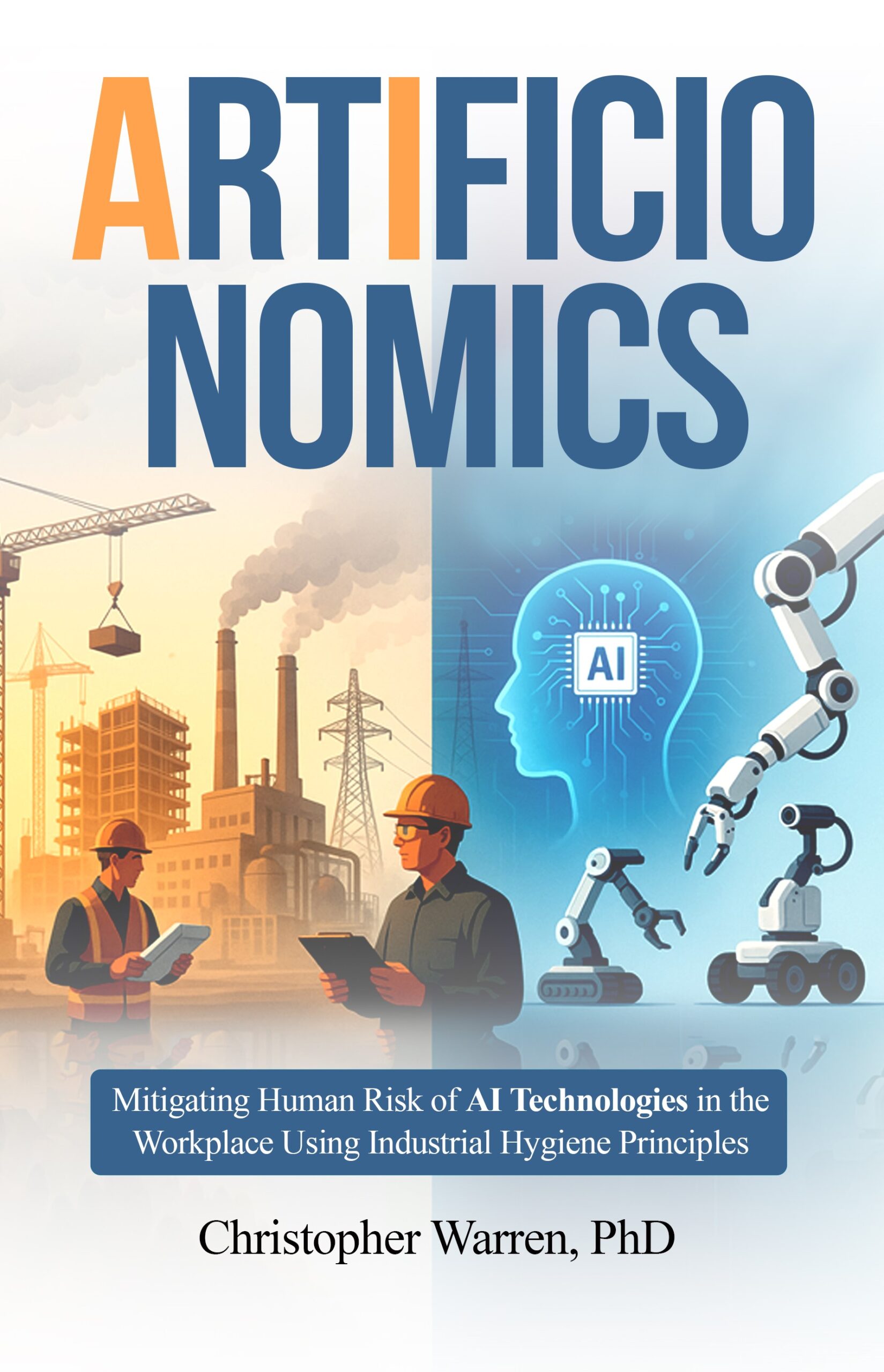
This is the central concern explored in Artificionomics: Mitigating Human Risk of AI Technologies in the Workplace Using Industrial Hygiene Principles by Christopher Warren, PhD. The book helps leaders understand that workplace innovation must be measured by more than speed, output, and cost savings. It must also be measured by its effect on worker health, dignity, judgement, and well-being.
Helpful AI at work supports human ability. It removes people from dangerous tasks, reduces repetitive strain, improves access to useful information, and helps workers make safer decisions. It is transparent, easy to question, and designed with worker input. It keeps people informed and gives them control when consequences matter. Most importantly, it strengthens trust between employees and the organization.
Harmful AI does the opposite. It watches workers without clear explanation, pushes unrealistic productivity targets, makes decisions that employees cannot understand, and removes human judgement from sensitive situations. It can create stress, fear, confusion, fatigue, and resentment. A system may look efficient on a performance report while quietly damaging morale and psychological safety.
Christopher Warren’s Artificionomics gives organizations a practical way to tell the difference. Using industrial hygiene principles, the book shows leaders how to identify, evaluate, and control the risks created by intelligent workplace systems. It encourages employers to ask the right questions before implementation. Does this tool reduce harm or simply shift it? Does it respect privacy? Does it preserve human oversight? Does it support workers, or does it control them? Are employees trained, informed, and involved?
The book is especially valuable because it presents a balanced view. It does not reject modern technology. It calls for responsible use. Warren recognizes that advanced systems and robotics can transform safety when they are introduced with care. But he also warns that tools without ethical safeguards can create new forms of workplace harm that traditional safety programs may overlook.
For executives, safety professionals, industrial hygienists, human resource leaders, and policymakers, Artificionomics is an essential guide to the future of work. It provides the language and framework needed to separate helpful innovation from harmful implementation.
The future workplace will not be judged only by how advanced its tools are. It will be judged by how well those tools protect the people who work there. Christopher Warren’s book makes that responsibility clear: technology is helpful only when it serves humanity.
Discover the framework for protecting people in AI-driven workplaces. Read ArtificIonomics today. https://www.amazon.com/dp/B0GFY4RL6B