Introducing advanced workplace technology is not just a business decision. It is a safety decision, a legal decision, and a human decision. Employers may be attracted by promises of faster workflows, lower costs, improved accuracy, and stronger performance tracking, but these benefits must be weighed against the risks such tools can create for workers.
This is the urgent message behind Artificionomics: Mitigating Human Risk of AI Technologies in the Workplace Using Industrial Hygiene Principles by Christopher Warren, PhD. The book gives employers a practical framework for understanding how intelligent workplace systems affect people, not just productivity.
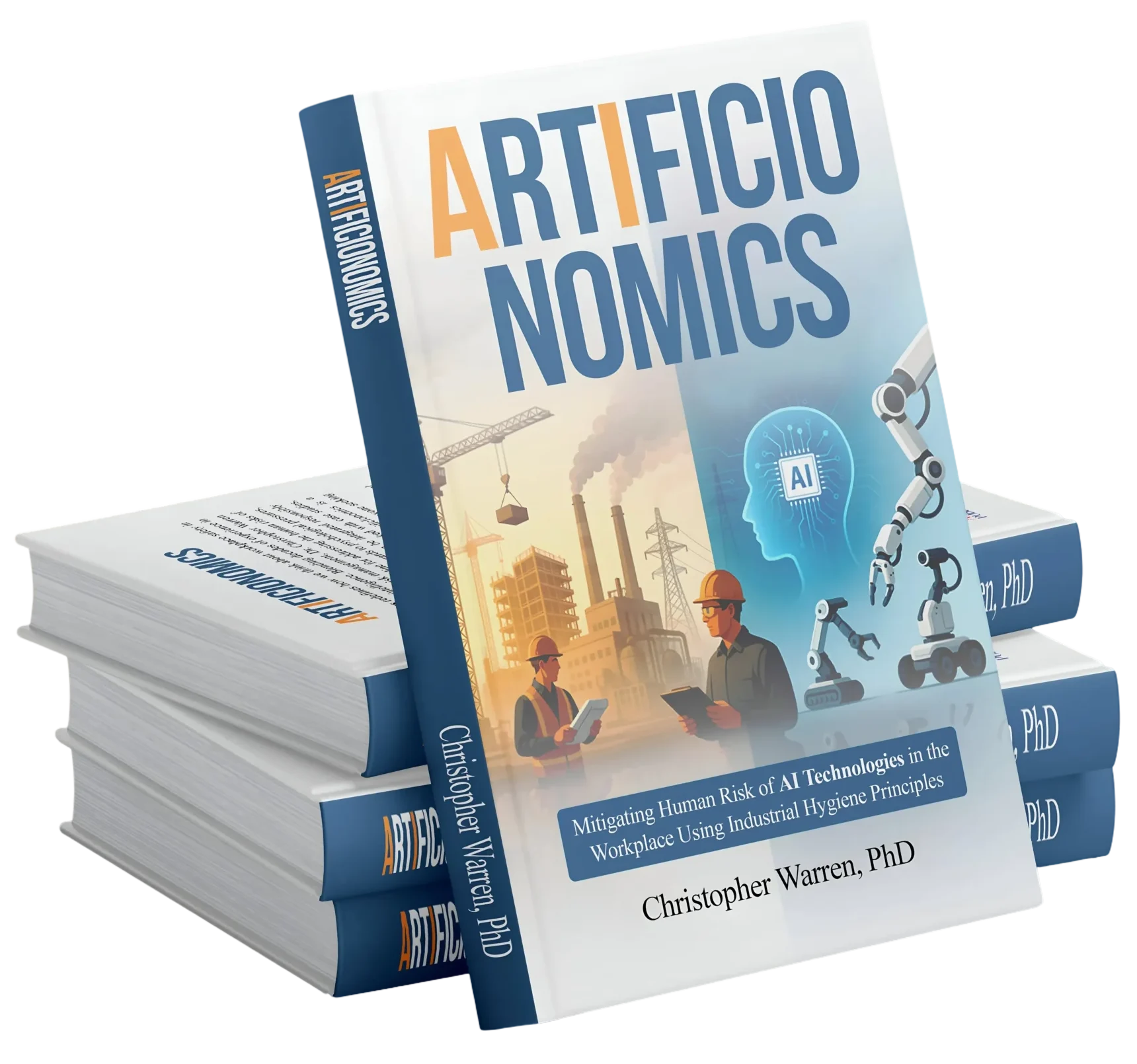
Before deploying any new tool, employers must first ask what problem it is solving and what new risks it may introduce. A system designed to monitor performance may improve oversight, but it may also increase stress, weaken trust, and make employees feel constantly watched. A tool used for hiring or promotion may save time, but it may also produce unfair outcomes if the process behind it is unclear. A robotic system may reduce physical strain, but it may also create new hazards if workers are not properly trained or if human oversight is weak.
Employers should also understand that readiness is not measured by installation alone. A workplace is only ready when leaders have assessed risks, trained employees, created clear policies, protected privacy, and established accountability. Workers need to know how the tool affects their role, how decisions are made, who reviews those decisions, and how concerns can be reported.
Christopher Warren’s Artificionomics shows why industrial hygiene principles are essential in this process. Employers must identify hazards, evaluate exposure, and control risk before harm occurs. In the modern workplace, exposure may include cognitive overload, digital fatigue, loss of autonomy, stress from constant monitoring, unclear decision pathways, and fear of displacement. These concerns are not secondary. They directly affect safety, morale, retention, and organizational trust.
The book also reminds employers that human judgement must remain central. Technology should support workers, not replace their voice or remove their dignity. Strong deployment requires worker feedback, transparent governance, regular audits, role based training, and clear limits on how systems are used. Without these safeguards, innovation can quickly become a source of harm.
For executives, safety professionals, industrial hygienists, human resource leaders, and policymakers, Artificionomics is an essential guide. It helps organizations move beyond excitement and into responsible action. Christopher Warren does not argue against progress. He shows how progress can be managed with care.
Before employers deploy advanced workplace tools, they must ask the most important question of all: will this make work safer, fairer, and more humane for the people who use it?
Artificionomics helps leaders answer that question with clarity, responsibility, and confidence.
Discover the framework for protecting people in AI-driven workplaces. Read ArtificIonomics today. https://www.amazon.com/dp/B0GFY4RL6B