Automation is transforming modern workplaces at a rapid pace. Intelligent systems now influence scheduling, performance monitoring, robotics coordination, predictive maintenance, and decision support across industries. These technologies promise efficiency and precision. Yet the true measure of progress lies not only in productivity gains, but in how well human dignity is preserved within increasingly automated environments.
Worker centric design begins with a simple principle. Technology should serve people, not reduce them to variables in an optimization model. When intelligent systems are introduced without this guiding ethic, subtle erosion can occur. Employees may feel surveilled rather than supported. Professional judgment may be overshadowed by automated outputs. Job roles may narrow into monitoring functions, diminishing autonomy and purpose.
Protecting dignity requires deliberate structural safeguards. Transparency is foundational. Workers should understand how systems function, what data is collected, and how decisions are influenced. Opaque tools breed mistrust and anxiety. Clear communication strengthens confidence and shared accountability.
Participation is equally essential. Employees who will interact with intelligent systems should be involved in design, testing, and evaluation. Their feedback can reveal unintended stressors, usability gaps, or safety concerns before full deployment. Participation reinforces the message that technology is being implemented with workers, not imposed upon them.
Human oversight must remain central. Automated recommendations should augment, not replace, professional judgment. Override mechanisms and escalation protocols ensure that individuals retain authority when systems produce questionable outputs. This layered control approach protects both safety and morale.
Physical and psychosocial exposures must also be evaluated together. In robotics integrated environments, collision and mechanical risks require disciplined controls. In digitally monitored settings, continuous data tracking can heighten stress and diminish trust if not properly governed. Worker centric design integrates physical safeguards with psychological protections.
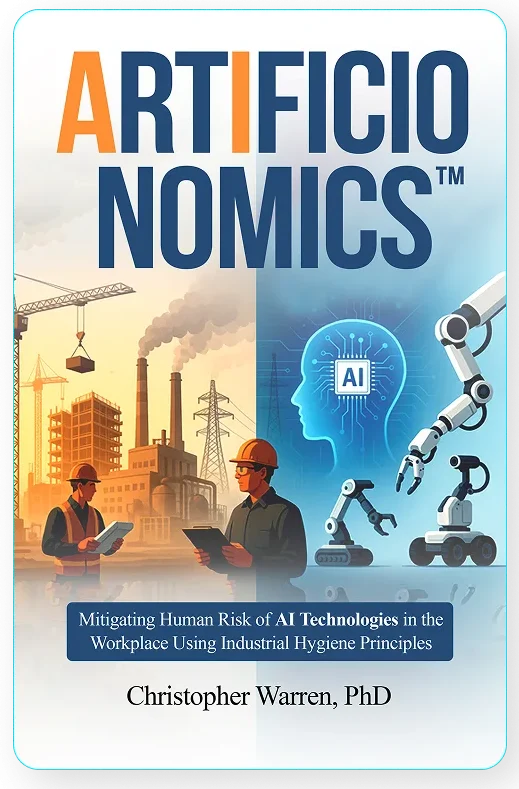
This integrated philosophy is central to Artificionomics: Mitigating Human Risk of AI Technologies in the Workplace Using Industrial Hygiene Principles by Dr. Christopher Warren. The book extends established industrial hygiene principles into the digital era, framing intelligent systems as potential occupational exposures that must be anticipated, evaluated, and controlled. It emphasizes measurable oversight, structured governance, and ethical accountability as core design elements.
Dignity is preserved when workers are treated as collaborators in innovation rather than passive recipients of automation. Training in system literacy empowers employees to understand capabilities and limitations. Clear boundaries on surveillance and data use reinforce respect. Leadership that prioritizes well-being alongside efficiency signals long term commitment to people.
Automated workplaces are not inherently dehumanizing. They become so only when governance fails to keep pace with deployment. Designing worker centric systems ensures that productivity does not come at the cost of trust, autonomy, or health.
As intelligent technologies continue to expand, organizations face a defining choice. They can pursue automation as an efficiency strategy alone, or they can embed human dignity into the architecture of innovation. Artificionomics provides the framework to achieve the latter. In the age of automation, safeguarding dignity is not an obstacle to progress. It is the foundation of sustainable success.
Get your Copy Now on Amazon: https://www.amazon.com/dp/B0GFY4RL6B.