Across modern workplaces, digital monitoring systems have become increasingly common. Intelligent platforms track productivity, analyze communication patterns, measure response times, and generate performance metrics in real time. Organizations often justify these systems as tools for efficiency, compliance, and operational transparency. Yet beneath the promise of optimization lies a quieter and more complex consequence. Algorithmic surveillance carries significant mental health costs.
When employees know that their actions are continuously monitored, subtle psychological shifts begin to occur. Autonomy can feel diminished. Trust may erode if monitoring is perceived as punitive rather than protective. Workers may become hyper focused on metrics rather than meaningful contribution. Over time, constant evaluation can heighten anxiety and contribute to chronic stress.
Unlike traditional workplace hazards, these exposures are not visible. There is no chemical odor, no mechanical vibration, no audible alarm. Instead, the strain accumulates cognitively and emotionally. Employees may experience decision fatigue as they attempt to optimize behavior to satisfy automated scoring systems. They may suppress creativity or risk taking to avoid negative flags. In high pressure environments, algorithmic ranking systems can intensify competition and reduce collaboration.
The mental health impact extends beyond individual stress. Organizational culture can shift toward surveillance driven management rather than trust based leadership. When communication is filtered through monitoring tools, authenticity may decline. Workers may hesitate to ask questions or admit uncertainty if they believe every interaction contributes to a permanent digital record. Over time, this environment can foster disengagement and burnout.
These risks are rarely measured during technology rollout. Procurement teams may evaluate system accuracy and integration compatibility, but seldom assess psychological exposure. Implementation plans may focus on productivity gains without considering how continuous monitoring reshapes professional identity and well-being. As a result, organizations can unintentionally introduce stressors that undermine morale and retention.
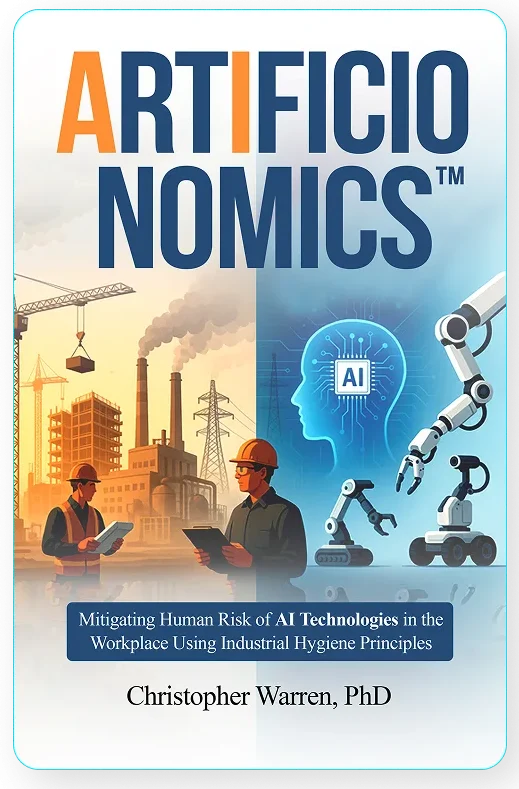
This is why Artificionomics: Mitigating Human Risk of AI Technologies in the Workplace Using Industrial Hygiene Principles by Dr. Christopher Warren is particularly timely. The book reframes intelligent system integration as an occupational health issue and applies structured risk management principles to digital environments. It recognizes that hazards are not limited to physical injury. They include psychosocial stress, cognitive overload, and erosion of dignity.
Artificionomics calls for organizations to anticipate these exposures, evaluate their impact, and implement layered safeguards. Transparency in monitoring practices, clear communication about purpose, and defined limits on data use are essential. Worker participation in system design and review strengthens trust and reduces unintended harm. Mental health indicators should be monitored alongside productivity metrics to ensure that efficiency does not come at the expense of well-being.
Algorithmic surveillance is often introduced in the name of accountability. True accountability, however, requires protecting the humans subject to the system. Intelligent monitoring tools must be governed with the same rigor applied to physical safety measures. Without disciplined oversight, the hidden costs can outweigh the intended benefits.
As workplaces continue to digitize, leadership must expand its definition of safety. Protecting employees now includes safeguarding mental and emotional health in environments shaped by constant data collection. Artificionomics provides the framework to navigate this challenge responsibly. In the age of intelligent systems, dignity and well-being must remain central to progress.
Get your Copy Now on Amazon: https://www.amazon.com/dp/B0GFY4RL6B.