Work has always carried risk. Over time, organizations learned how to manage physical hazards, regulate exposure, and reduce injury through structured safety programs. Those programs worked because risks were visible and repeatable. Today, many of the forces shaping work are less obvious, yet just as influential. That is why ArtificIonomics is necessary.
Artificial intelligence now influences how tasks are assigned, how performance is evaluated, and how decisions are made. These systems do not replace safety concerns. They change them. The challenge is not that safety principles are outdated. The challenge is that they are being applied to a work environment they were never designed to fully address.
Safety Has Always Followed Work
Safety evolves when work changes. The rise of industrial machinery led to guarding and lockout procedures. Chemical manufacturing led to exposure limits and monitoring. Each shift required new ways of seeing risk.
AI represents another shift. It shapes attention, pace, and judgment. It can compress timelines, increase monitoring, and reduce autonomy without ever touching a physical surface. These influences affect how people experience work, and therefore how safe they are.
Ignoring these influences does not make them disappear. It simply leaves them unmanaged.
Why Traditional Approaches Fall Short
Many organizations still treat AI as a technical or operational issue. Safety teams are brought in after deployment, asked to review impacts once workflows have already changed. By that point, habits are set and systems are embedded.
Traditional safety tools struggle to capture these risks because they focus on static conditions. AI driven environments are dynamic. Systems update, adapt, and interact with other tools. Risk accumulates quietly through small changes in workload, pressure, and clarity.
ArtificIonomics fills this gap by reframing AI as a workplace exposure. It applies familiar safety thinking to new influences rather than inventing an entirely new discipline.
A Bridge Between Technology and Human Experience
ArtificIonomics is not about resisting technology. It is about understanding how technology affects people. It brings together safety, health, governance, and work design into a single framework.
This approach helps organizations anticipate risk rather than respond after harm occurs. It encourages early assessment, continuous monitoring, and human oversight. Most importantly, it keeps responsibility with people, not systems.
As AI becomes more embedded in daily work, this perspective becomes essential. Safety cannot remain focused only on what we can see. It must also address what shapes behavior.
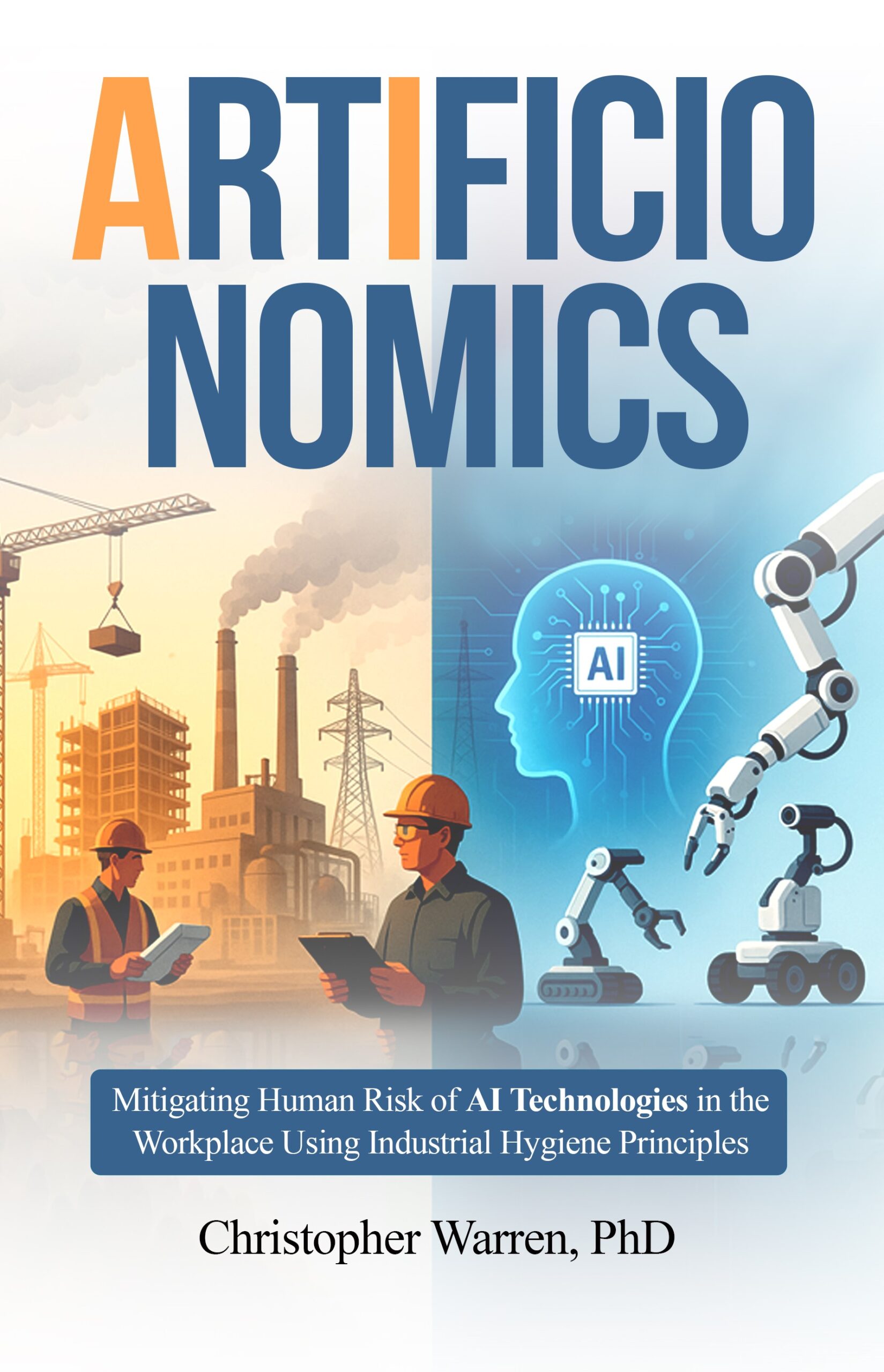
For readers seeking a structured way to manage these challenges, ArtificIonomics: Mitigating Human Risk of AI Technologies in the Workplace Using Industrial Hygiene Principles offers practical guidance rooted in decades of safety practice, adapted for modern work.
By blending decades of experience in industrial hygiene and risk management, Dr. Christopher Warren introduces a groundbreaking new discipline for addressing the human risks associated with AI and robotics. From physical hazards to psychological pressures, this book reveals how technology can be integrated responsibly without sacrificing worker well-being. Packed with case studies, practical tools, and actionable strategies, ArtificIonomics is a must-read for safety professionals, executives, and anyone seeking to protect people while embracing innovation.